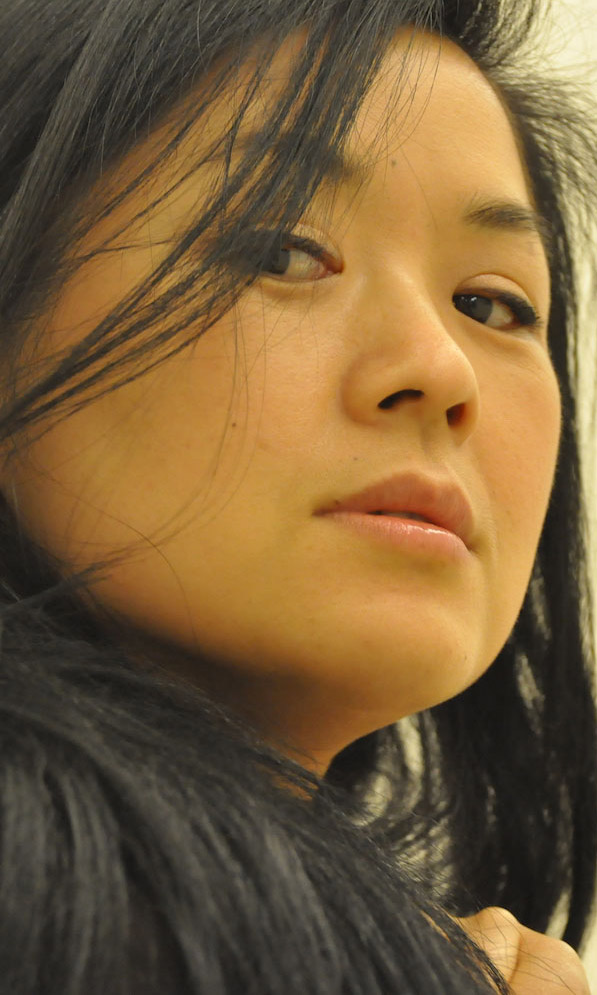
崔岫闻
Cui Xiuwen
1967 年生于哈尔滨,逝于 2018 年。1990 年获得东北师范大学学士学位,1996 年毕业于中央美术学院油画系,获艺术硕士学位。崔岫闻是一位运用多种媒介手法的艺术家,创作方向多在人类的性别和精神领域。她的实验创作涉及摄影、影像、绘画,是对自我、灵魂为同一客体和主体的思考。崔岫闻是最早被英国泰特美术馆邀请举办展览的中国艺术家之一。她的早期作品建基于她对时下忌讳的探索和对常规的批判,通过不断地自我挑战和自我突破,她后期的作品回避了对她来说最专业熟练的影像和摄影,运用布面油画为主要媒介,通过表现冥想风格的几何图形的抽象,展现了崔岫闻对世界更加成熟的理解。
重要个展包括:“光 —— 吉莉安・塞克勒女爵士国际艺术家展览项目”(北京大学塞克勒考古与艺术博物馆,2016);“灵魂之爱”(今日美术馆,北京,2014);“IU—— 我和你”(澳大利亚中国当代艺术基金会艺术空间与苏州美术馆,2013);“神域”(今日美术馆,北京,2010)。重要国际群展包括:“十三 —— 今日中国影像”(P.S.1 当代艺术中心,纽约,2006);“无题:朱丽娅・罗克铁夫,尤莉卡,崔岫闻”(泰特现代美术馆,伦敦,2004);“那么中国呢?”(蓬皮杜中心,巴黎,2003)。
Born in Harbin, 1967, passed away in 2018. Cui Xiuwen received a BA at Northeast Normal University in 1990, and an MFA from the Department of Oil Painting, Central Academy of Fine Arts, Beijing. As a multimedia artist investigating the realms of human sexuality and spirituality, Cui’s experimentations with photography, video, and painting are considerations of the self and soul as simultaneously subject and object. As an important creative figure in China’s contemporary art scene, Cui’s contribution to the art was recognized in her participation as the first Chinese artist to be invited to exhibit at Tate Modern. Her early works were based on her exploration of current taboos and criticism of conventions. Constantly challenging herself, Cui’s most recent body of work utilized oil on canvas as the primary medium, departing from her expert use of video and photography. These formalist new works convey Cui’s matured understanding of the world through a meditative style of geometric abstraction.
Her major solo exhibitions include: “Angel’s Light: Dame Jillian Sackler International Artists Exhibition Program” (Arthur M. Sackler Museum of Art and Archaeology At Peking University, 2016), “IU: You & Me” (Australia Chinese Contemporary Art Foundation / Suzhou Art Museum, Suzhou, 2013), “The Domain of God” (Today Art Museum, Beijing, 2010), as well as international group exhibitions, “The Thirteen: Chinese Video Now” (MoMA PS1, New York, NY, 2006), “Untitled: Julia Loktev, Julika Rudelius, Cui Xiuwen” (Tate Modern, London, UK, 2004), and “Alors, la Chine?” (Centre Pompidou, Paris, France, 2003).