娟娟独立寒塘路:中国古代艺术中的女性
Women in Ancient Chinese Art
冯幼衡 Feng Youheng, 2024
Women in Ancient Chinese Art
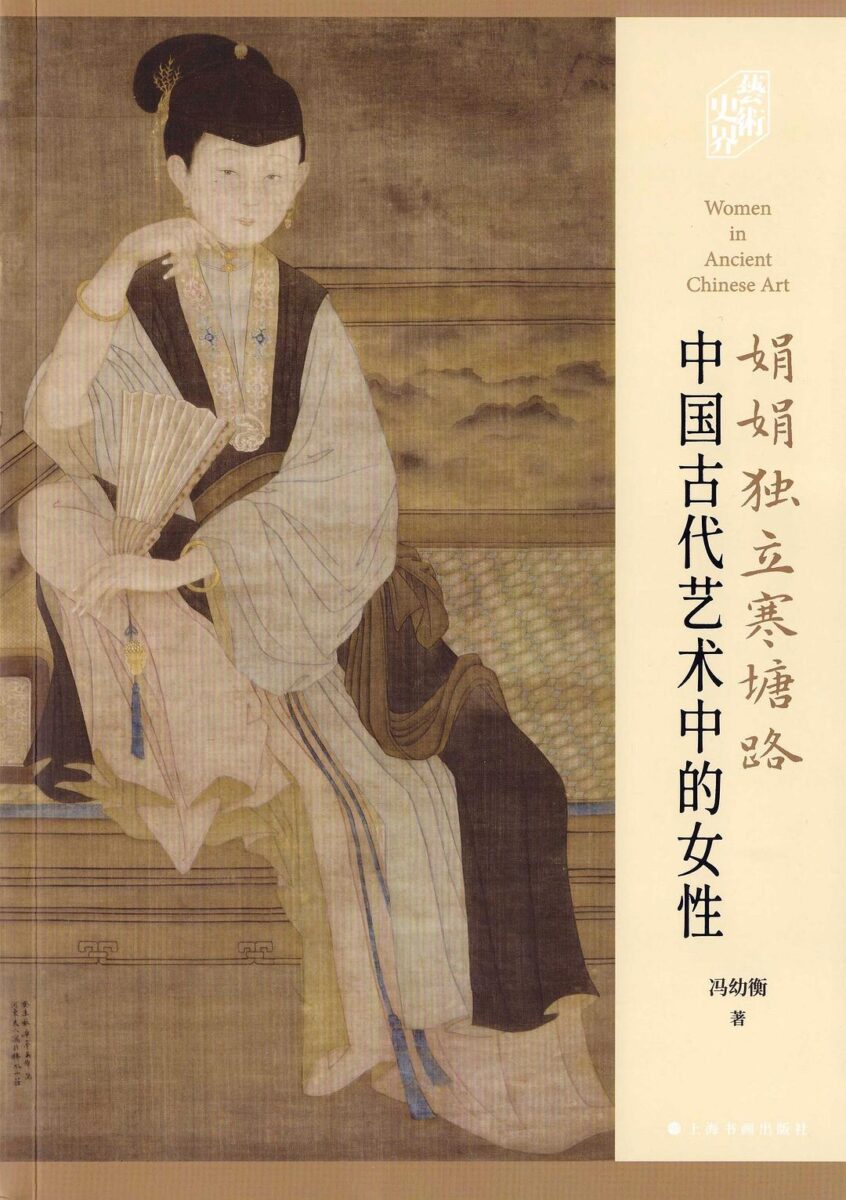
《娟娟独立寒塘路:中国古代艺术中的女性》Women in Ancient Chinese Art
冯幼衡 Feng Youheng, 2024
上海书画出版社 Shanghai Calligraphy and Painting Publishing House
- 中文 Chinese
- 2024
- 1524152344
性别研究与女性主义在西方世界蔚为风气,早已行之有年。本书作者冯幼衡博士早年在西方求学,师从方闻(1930~2018),受西方学界影响,试图从西方汉学界已经开拓的一些对传统中国女性的研究为基础,结合历代的艺术史发展,为艺术史的研究,在传统的角度之外,开启一扇新的窗口。
作者认为本书所涵盖的篇章正反映了中国艺术史上女性由边缘走向中心的过程⸺走过了一条从 “贞女”、“美女” 到 “才女” 的坎坷长路。直至明清时代,女性艺术家们才把长久以来掌握诠释女性意象的权力从男性手中取回。如薛素素(约 1575~1653)笔下的仕女不再仅为满足男性目光或成为其意识形态的投射而存在。
本书除绪论外,分为五个章节。第一章,以董小宛(1624~1651)为女画家代表,回顾她短短二十八年人生中精彩的艺术创作,继而在中国语境下思索西方学者琳达・诺克林那个著名的提问:“为什么没有伟大的女性艺术家?” 第二章,从唐寅(1470~1524)及陈洪绶(1598~1652)的仕女画讨论明清之际对女性内涵的反思与新境⸺譬如陈大胆瓦解了观音的图像范式,塑造了男女莫辨的观音形象,一定程度上打破了性别的成见。第三章,从明清女性肖像画的特征出发,探讨社会环境对女性创作肖像画的深刻影响⸺认为社会的制约不仅表现在肖像画的技巧,也表现在呈现肖像画主的方式和内涵上。第四章,通过回顾慈禧(1835~1908)一生的肖像及以她为主角的画像,反映出作为清帝国实际最高统治者的她,与作为后宫女性受到诸多限制的她,所经历的矛盾与角力。第五章,由对现代女书家董阳孜(1942~)的作品评论为结尾,为其对汉字中图画美的重现,为其 “龙跳天门,虎卧凤阙” 的气势击节赞叹。
Gender studies and feminist theories have long been established as influential academic disciplines in the Western world. The author, Dr. Feng Youheng, who studied under the eminent art historian Wen C. Fong (1930–2018) during her formative academic years in the West, endeavors to expand the methodological horizons of art history. Building upon the foundational scholarship of Western Sinology in examining traditional Chinese womanhood, this book innovatively intersects with the evolutionary trajectory of Chinese art history across dynastic periods, thereby proposing an alternative paradigm to conventional art historical approaches.
The author contends that the selected chapters epitomize women’s arduous trajectory in Chinese art history—evolving from the margins to the center—a centuries-long transition from being represented as “chaste icons,” “aesthetic objects” to finally emerging as “cultivated artists.” Not until the Ming-Qing period did female practitioners systematically reclaim the representational agency over feminine imagery, a discursive power traditionally monopolized by male creators. A paradigmatic case is Xue Susu’s (c. 1575–1653) courtesan-portraits, wherein the female figure transcends its conventional role as either a vessel for patriarchal voyeurism or a canvas for masculine ideological projections. Chapter Three examines the features of women’s portraiture in Ming and Qing dynasties, showing how social norms deeply influenced female artists—affecting not just their painting techniques, but also how portrait subjects were presented and perceived. Chapter Four analyzes portraits of Empress Dowager Cixi (1835–1908), revealing the tension between her role as Qing Dynasty’s supreme ruler and the limitations she faced as a woman in the imperial court. Chapter Five concludes with modern calligrapher Dong Yangzi (b. 1942), celebrating how she brilliantly recaptures the visual beauty of Chinese characters, creating works of tremendous vitality and power.
Apart from the introduction, the book is divided into five chapters. Chapter One centers on Dong Xiaowan (1624–1651) as a representative female painter, revisiting her remarkable artistic output during her brief twenty-eight-year life. It then reflects—within the Chinese context—on Western scholar Linda Nochlin’s famous question: “Why have there been no great women artists?” Chapter Two explores depictions of women by Tang Yin (1470–1524) and Chen Hongshou (1598–1652), examining how these works, produced during the Ming-Qing transition, prompted new reflections on the concept of femininity. For example, Chen challenged traditional portrayals of Guanyin (the Bodhisattva of Compassion) by creating gender-ambiguous versions, breaking away from conventional gender roles of the time.
作者简介AUTHOR’S BIOGRAPHY
冯幼衡,台湾大学外文系学士,美国普林斯顿大学艺术考古系博士。曾任艺术家张大千私人秘书,并曾服务于台北故宫博物馆书画处,先后任教于维吉尼亚理工暨州立大学艺术系、加州州立大学洛杉矶分校艺术系、台南艺术大学艺术史系、台湾艺术大学书画系。
Dr. Feng Youheng holds a Bachelor’s degree in Foreign Languages from National Taiwan University and a PhD in Art and Archaeology from Princeton University. She served as the private secretary to the artist Zhang Daqian and worked in the Painting and Calligraphy Department of the National Palace Museum in Taipei. Dr. Feng has taught at Virginia Tech, California State University, Los Angeles, Tainan National University of the Arts, and National Taiwan University of Arts, specializing in art history and painting.