抽象之“变”:
物的反思与思辨的形塑
An Abstraction Turn:
The Reflection on Objects and the Shaping of Speculative Thinking
长久以来,无论是在日常语境或是相关的专业探讨中,思辨力、抽象思维与高度的反思性似乎总是与关于女性的一切保持着 “恰当” 的距离。在很多情况下,说一位女性具有冷静、沉思的特性或拥有高度的思辨力,仍然可能被看作是一种不自觉的 “赞誉”,其背后的逻辑是:这位女性超越了性别属性为她带来的天然局限,突破了某种 “自然而然” 的状态而 “进阶” 到了为绝大多数男性所把持的精神高地。这种潜藏的观念不可谓不根深蒂固而积习难迁。19 世纪末的奥地利哲学家奥托・魏宁格(Otto Weininger)曾用 “涵拟”(henid)这一概念将女性的思维特点界定为 “尚未成为观念和思想的心理材料”,并认为女人只能专注于情感和性而缺乏高度思辨的能力,这样的性别认知在今天看来当然是愚昧甚至荒诞的。然而,那种潜意识地认同女性比男性更需要克服某种限制才能跨入思辨与抽象领域的观念,可谓是 “涵拟论” 的当代更新版本。在这其中,“女艺术家” 这一群体并没有因其工作的天然创造性而免于被纳入这种普泛观念的窠臼之中,反而往往成为被拿来印证这些陈词滥调的典型 —— 她们 “应该” 更感性、更耽于情感的抒发,更深地陷入 “涵拟” 的迷思之中,就像世俗版本的 “缪斯” 总是神秘、善感而难以把握,她们从来都与思想的清晰与力量无关。
Whether in everyday contexts or professional discussions, women and everything associated with women have long been considered as distanced from capacities for speculative and abstract thinking and profound reflection. Characteristics such as calmness, contemplation, or high speculative capacities, when attributed to a woman, are often considered compliments. However, the subtext implies that the woman has transcended the limitations imposed by her gender, advancing to the intellectual high ground predominantly held by men, breaking away from a certain perceived natural state. This deeply ingrained notion continues to persist. The late nineteenth-century Austrian philosopher Otto Weininger introduced the concept of henid to define the mental characteristics of women as a type of psychical content that has not yet evolved into concepts and thoughts. He believed that women are only capable of emotions and sexuality, lacking the capacity for high-level speculation. While such views are considered ignorant and absurd today, the underlying notion of henid looms in the public subconscious. Women are still often believed to face more restrictions in entering the realms of speculation and abstraction compared to men. This perspective extends to female artists, who, despite the creativity of their work, are not exempt from such generalizations. They are frequently used as examples to reinforce these clichés: being expected to be more sensitive, more inclined to express emotions, and more deeply confined in the myth of henid. Similar to the public imagination of Muses, female artists tend to be associated with mystery, sensitivity, and elusiveness, rather than clarity of thought and intellectual prowess.
正是在这种观念的惯性中,当下一些女性艺术家的创作以她们各自的方法和路径显现出另一种整体的方向性:即,越来越直接和明确地将对周遭事物及其关系的反思和一种趋于抽象关系的思辨力作为引导其创作的主要力量。这些实践主要集中地发生在更广义和宽泛的 “形塑”(plastique)领域 —— 形塑的对象不仅仅是现实的物,自然之物、人造物或现成品,更包含了抽象的关系,如人与物,物与空间,材料与感知,形象与语言等等。因此,它们既明确地带有传统雕塑对物象及其形态的塑造意识,同时又在一种扩大化了的空间和关系形塑中保留了与身体甚至生命的重要连结。在这个意义上,抽象的思辨力和对关系的反思作为引导她们创作的一种共同观念结构,或是方法,就不是一种集中的巧合。一方面,这些艺术家虽然使用不同的媒材,但她们普遍关心的是物的存在及其形态所带出来的生命经验关系,是作为语言、语法而不是内容的物之元素,在这种情况下,“形塑” 的动作就必然包含了对更抽象的力量关系和存在状态的反思,而这种反思也反过来与根植于身体的确切经验构成了创作的张力;而另一方面,并不是因为这些作品背后的创作者都是女性,它们才被共同归拢于性别认识的问题,此处所涉及的或许是一种更加隐藏和内化了的女性主义,它的形式不再是宣言式的,也不执着于观念姿态上的性别对抗色彩,而是以自身更普泛化的问题意识和工作方法直面关于人的感知、生命和存在的共同课题。
Some contemporary female artists are actively challenging and diverging from the entrenched notions surrounding women’s intellectual capacities, showcasing a different trajectory in their works, methods, and artistic paths. Their reflections on surrounding phenomena and their relationships, as well as speculative thinking of abstract relations, have become increasingly direct and explicit. These practices primarily unfold in the broader field of plastique, where the objects being shaped encompass not only real, natural, man-made, or ready-made things, but also abstract relationships, such as the interplay between human and object, object and space, material and perception, image and language, and so forth. Therefore, they bear a clear consciousness of traditional sculpture’s role in shaping objects and their forms, while also retaining a vital connection to the body and even life for an expanded space and relationship shaping. It is thus not a coincidence that abstract speculative thinking and reflection on relationships serve as guiding conceptions and methods for their creative works. While employing different media, these artists share a common concern for the life experience and relationships brought forth by the objects’ being and their forms. The object is not mere content, but also functions as language and grammar. Plastique inevitably involves reflection on more abstract power dynamics and states of being, which along with bodily experiences, endows creative works with complexities. Importantly, the association of these artists with gender awareness is not solely because they are all women. Their works suggest a form of feminism that is subtler and internalized, no longer declarative or oppositional, but rather confronts universal issues regarding human perception, life, and being. Their approach reflects a more inclusive awareness and working methods that transcend gender boundaries.
这里的抽象与思辨,究其根本是一场“解构”之变,它不仅关乎在美学上对于完整的外部具象意义的拆解,也关乎一种去除了女性主义显性标签的女性主义创作实践,以此而对更加普遍化的人与生命的问题发起直接的提问。
The abstraction and speculation discussed here, are fundamentally a matter of deconstruction. It involves not only the aesthetic deconstruction of external figurative meanings, but also the formation of a feminist creative practice that moves beyond explicit feminist labels, thereby directly addressing more universal issues of human existence.The abstraction and speculation discussed here, are fundamentally a matter of deconstruction. It involves not only the aesthetic deconstruction of external figurative meanings, but also the formation of a feminist creative practice that moves beyond explicit feminist labels, thereby directly addressing more universal issues of human existence.
长久以来,无论是在日常语境或是相关的专业探讨中,思辨力、抽象思维与高度的反思性似乎总是与关于女性的一切保持着 “恰当” 的距离。在很多情况下,说一位女性具有冷静、沉思的特性或拥有高度的思辨力,仍然可能被看作是一种不自觉的 “赞誉”,其背后的逻辑是:这位女性超越了性别属性为她带来的天然局限,突破了某种 “自然而然” 的状态而 “进阶” 到了为绝大多数男性所把持的精神高地。这种潜藏的观念不可谓不根深蒂固而积习难迁。19 世纪末的奥地利哲学家奥托・魏宁格(Otto Weininger)曾用 “涵拟”(henid)这一概念将女性的思维特点界定为 “尚未成为观念和思想的心理材料”,并认为女人只能专注于情感和性而缺乏高度思辨的能力,这样的性别认知在今天看来当然是愚昧甚至荒诞的。然而,那种潜意识地认同女性比男性更需要克服某种限制才能跨入思辨与抽象领域的观念,可谓是 “涵拟论” 的当代更新版本。在这其中,“女艺术家” 这一群体并没有因其工作的天然创造性而免于被纳入这种普泛观念的窠臼之中,反而往往成为被拿来印证这些陈词滥调的典型 —— 她们 “应该” 更感性、更耽于情感的抒发,更深地陷入 “涵拟” 的迷思之中,就像世俗版本的 “缪斯” 总是神秘、善感而难以把握,她们从来都与思想的清晰与力量无关。
Whether in everyday contexts or professional discussions, women and everything associated with women have long been considered as distanced from capacities for speculative and abstract thinking and profound reflection. Characteristics such as calmness, contemplation, or high speculative capacities, when attributed to a woman, are often considered compliments. However, the subtext implies that the woman has transcended the limitations imposed by her gender, advancing to the intellectual high ground predominantly held by men, breaking away from a certain perceived natural state. This deeply ingrained notion continues to persist. The late nineteenth century Austrian philosopher Otto Weininger introduced the concept of henid to define the mental characteristics of women as a type of psychical content that has not yet evolved into concepts and thoughts. He believed that women are only capable of emotions and sexuality, lacking the capacity for high-level speculation. While such views are considered ignorant and absurd today, the underlying notion of henid looms in the public subconscious. Women are still often believed to face more restrictions in entering the realms of speculation and abstraction compared to men. This perspective extends to female artists, who, despite the creativity of their work, are not exempt from such generalizations. They are frequently used as examples to reinforce these clichés: being expected to be more sensitive, more inclined to express emotions, and more deeply confined in the myth of henid. Similar to the public imagination of Muses, female artists tend to be associated with mystery, sensitivity, and elusiveness, rather than clarity of thought and intellectual prowess.
正是在这种观念的惯性中,当下一些女性艺术家的创作以她们各自的方法和路径显现出另一种整体的方向性:即,越来越直接和明确地将对周遭事物及其关系的反思和一种趋于抽象关系的思辨力作为引导其创作的主要力量。这些实践主要集中地发生在更广义和宽泛的 “形塑”(plastique)领域 —— 形塑的对象不仅仅是现实的物,自然之物、人造物或现成品,更包含了抽象的关系,如人与物,物与空间,材料与感知,形象与语言等等。因此,它们既明确地带有传统雕塑对物象及其形态的塑造意识,同时又在一种扩大化了的空间和关系形塑中保留了与身体甚至生命的重要连结。在这个意义上,抽象的思辨力和对关系的反思作为引导她们创作的一种共同观念结构,或是方法,就不是一种集中的巧合。一方面,这些艺术家虽然使用不同的媒材,但她们普遍关心的是物的存在及其形态所带出来的生命经验关系,是作为语言、语法而不是内容的物之元素,在这种情况下,“形塑” 的动作就必然包含了对更抽象的力量关系和存在状态的反思,而这种反思也反过来与根植于身体的确切经验构成了创作的张力;另一方面,并不是因为这些作品背后的创作者都是女性,它们才被共同归拢于性别认识的问题,此处所涉及的或许是一种更加隐藏和内化了的女性主义,它的形式不再是宣言式的,也不执着于观念姿态上的性别对抗色彩,而是以自身更普泛化的问题意识和工作方法直面关于人的感知、生命和存在的共同课题。
Some contemporary female artists are actively challenging and diverging from the entrenched notions surrounding women’s intellectual capacities, showcasing a different trajectory in their works, methods, and artistic paths. Their reflections on surrounding phenomena and their relationships, as well as speculative thinking of abstract relations, have become increasingly direct and explicit. These practices primarily unfold in the broader field of plastique, where the objects being shaped encompass not only real, natural, man-made, or ready-made things, but also abstract relationships, such as the interplay between human and object, object and space, material and perception, image and language, and so forth. Therefore, they bear a clear consciousness of traditional sculpture’s role in shaping objects and their forms, while also retaining a vital connection to the body and even life for an expanded space and relationship shaping. It is thus not a coincidence that abstract speculative thinking and reflection on relationships serve as guiding conceptions and methods for their creative works. While employing different media, these artists share a common concern for the life experience and relationships brought forth by the objects’ being and their forms. The object is not mere content, but also functions as language and grammar. Plastique inevitably involves reflection on more abstract power dynamics and states of being, which along with bodily experiences, endows creative works with complexities. Importantly, the association of these artists with gender awareness is not solely because they are all women. Their works suggest a form of feminism that is subtler and internalized, no longer declarative or oppositional, but rather confronts universal issues regarding human perception, life, and being. Their approach reflects a more inclusive awareness and working methods that transcend gender boundaries.
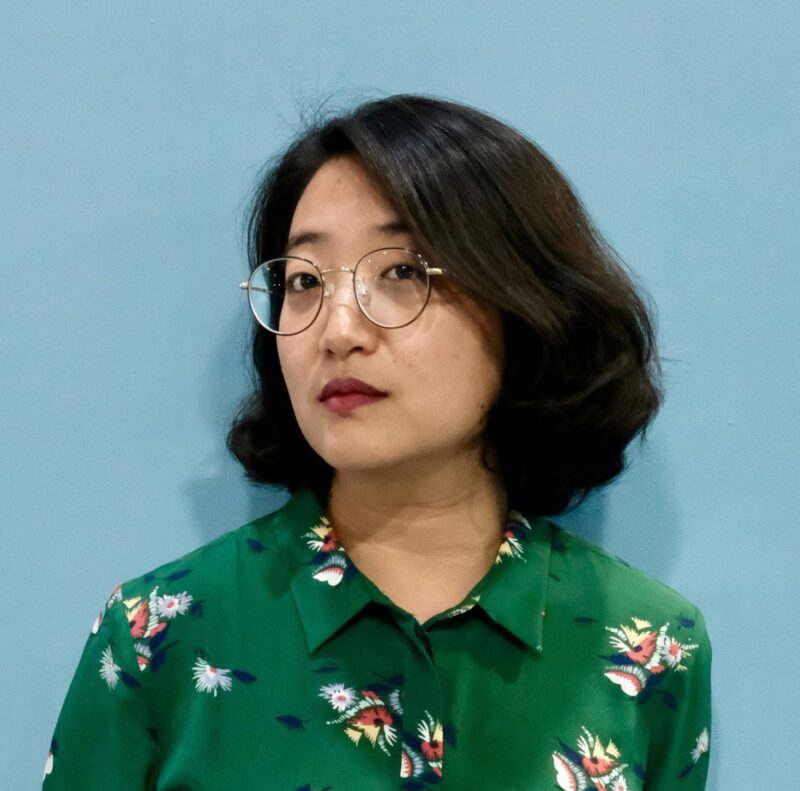
胡晓媛 最近几年的创作是这一方向上的代表。她早年间那些使用了木头、绢和刺绣的 “装置” 已经在关注物的存在与其周遭世界的关系问题,但手法仍然是摹写式的,存在着一个可参照的世界和一个在絮絮诉说的创作者,所有可能的语言、结构、关系都是从这个具体的、特定的创作者那里发出的。而她近五六年的创作开始渐渐摆脱了这个 “小写” 的表达者和叙述者,视角变得更加普遍化,言说者可以无所不在却并不能被确切地找出来。她手中所塑的那些材料,无论是木头、钢丝、绡、线或者大理石,其本身的样态并没有发生太大的改变,却似乎进入了一个更广大的存在关系的剧场(展览 “瓮中沙”,2021;展览 “沙径”,2022)。这些物象和形态之间的生命关联、它们与意识及心理场域之间的关系被艺术家更直白地暴露出来了,暴露的过程不是叙述、表达,而是推论和反思。作为上世纪 70 年代末出生的艺术家,在胡晓媛自身创作上所发生的这一转变也在很大程度上与中国乃至世界范围内女性艺术家的转变是一致的:更早时期的女性主义创作往往带有更多自身预设的发力点,比如与身体绑定的既定叙事结构(生理与身体符号或情感故事),或是带有特定隐喻指向的媒介和形式(织物或针线,性征表现等),总之,“物” 的使用在女性的艺术创作中往往是非常具象和再现化的,而这些典型可供辨识的特性在近些年来的女性创作中已经越来越没那么显性,取而代之的是对 “物” 越来越抽象化和更多地去除其隐喻和象征意义的实践。胡晓媛不同时期的作品明显地跨越了这些变化,她在个人的创作语汇逐渐成熟精准的同时,也印证了更普泛的世代变化中女性艺术家们时代语言的转变。
Hu Xiaoyuan’s recent works exemplify this direction. In her earlier installations involving wood, silk, and embroidery, she already explored the presence of objects and their relationships with the surrounding space. Yet her approach then was largely mimetic, with a referential world and narrator-creator. All possible languages, structures, and relations emanated from this particular creator. Over the past five or six years, her practice has gradually departed from this mode of expression and narration. The perspective has become more universal, with the narrator appearing omnipresent but eluding precise identification. The materials she shapes, whether wood, steel wire, silk, thread, or marble, have not undergone significant changes in their inherent forms, but seem to have entered a more expansive theater of existential relationships (as seen in exhibitions such as “The Sand From the Urns”, 2021; “Paths in the Sand”, 2022). She displays more explicitly the connections among the lives of these objects and forms, emphasizing their relationships with conscious and psychical realms. This exposes a process of inference and reflection, rather than narration and expression. Born in the late 1970s, Hu Xiaoyuan’s shift in creative work aligns with the broader transformation seen in female artists in China and globally. Earlier feminist creations often had predetermined points of focus, such as established narrative structures tied to the body (physiological and bodily symbols or emotional stories), or metaphors through specific media and forms (fabric or needlework, symbolic representations of gender, etc.). The use of objects in female artistic creation overall was figurative and representational. However, these recognizable characteristics have become less explicit in the latest works by female artists. Instead, there is a trend toward greater abstraction of objects and the removal of their metaphorical and symbolic meanings. Hu’s works from different periods clearly illustrate these changes. While her visual vocabulary has become more mature and precise, it also reflects the broader shift in the creative language of female artists.
成长于跨欧亚文化背景、具有一半华裔血统的 谢素梅 也是这一方向转变上颇具代表性的艺术家,其作品反映了在世纪之交成长起来的、受过高度智性化和建制化艺术教育的一代艺术家的整体风貌。比较特殊的是,谢素梅对语言之抽象化力量的运用和对感觉的秩序性编排来源于其大提琴演奏家的经历,她非常擅长将不可见的事物关系 —— 节律、记忆、时间的流动性等等,转换为被时间和空间所共同塑造的可见物。多元文化之间的交织和重构是谢素梅创作中另一条关键的线索,其结果是艺术家对一种跨文化的普遍造型语法的格外关注,其作品虽然呈现为不同的媒介形式,内核却都是对于人之存在的心理与精神场域的形塑实验(《许多说过的话》,2009~2017)。同样特别擅长对记忆和声音予以形塑的艺术家还包括出生于台北的 杨季涓,她说故事,做雕塑和装置,也写作,在不同的物件、事件和空间之间创建彼此交错和穿插的情境,她的创作起点往往非常具体和私人化,却最终使用了一种近似于 “调节” 的手法,来完成对周遭世界颇具温度感的反思(《Plastonki》,2020),而这种温情与和缓的底色,并没有被艺术家刻意地提取出来转变为一种泛女性化的创作指征,而是为作品打开了更内在化的反思空间。陈哲 也非常擅长在文本、影像和空间 “形塑” 之间展开多通道的切换,比起早期将身体及其疼痛隐喻直陈而出的一系列创作,她近几年的作品开始越来越多地将这些表达予以类比化:以宇宙的宏观意象类比肉身的微观经验,以神话的时间尺度类比当下瞬间的千万流动与变化,以物的材料类比字句,以梦境类比现实……(《古梦》系列,2020~2021;《向远的圆是你》,2022~2023)。艺术家展现了她运用 “虚构” 的独特能力 —— 不限于那种说故事意义上的虚构,而是对物与物之间、物与影像和词语之间不断跨越的生成关系的虚构。
Su-Mei Tse, who is half Chinese and grew up in a mixed European-Asian cultural background, emerges as a representative figure in this evolving artistic shift. Her works illuminate a generation of artists who came of age at the turn of the century and received highly intellectualized and institutionalized art education. Tse distinguishes herself in her use of the abstract power of language and the ordered arrangement of sensations, derived from her experience as a cellist. She is proficient in transforming invisible relationships, such as rhythm, memory, and the flow of time, into visible entities shaped by time and space. Another key strand in her work is the interweaving and reconstruction of diverse cultures, leading to a cross-cultural and universal grammar of shaping. While she employs different media for her work, their shared underpinnings are her experimentation with shaping the psychological and spiritual domains of human existence (Many Spoken Words, 2009–2017). Another artist who stands out in her ability to shape memory and sound is Yang Chi-Chuan, originally from Taipei. As a storyteller, sculpture and installation maker, and writer, she crafts scenarios that intersect different objects, events, and spaces. She often starts with specific and personal things, but ultimately adjusts to a mellow reflection on the surrounding world (Plastonki, 2020). The warm and gentle undertone is not deliberately utilized by the artist as a generalized signifier of femininity, but rather opens up an internalized space for contemplation. Chen Zhe is also highly skilled in switching between text, image, and space. Compared to her earlier works that laid bare the metaphor of the body and its pain, her recent works increasingly analogize these expressions: the macrocosmic imagery of the universe as the microcosmic experience of the flesh, the mythical time scale as the constant flow and change of the present moment, the materiality of objects as words and phrases, dreams as reality. (Reading Old Dreams series, 2020–2021; You are a Circle, Expanding, 2022–2023). Her unique ability to fictionalize extends beyond storytelling, continuously traversing generative relationships between objects, images, and words.
另一些艺术家则致力于从更加观念化的路径上去探索这种抽象的形塑,其中包含了更多对行为、语言和社会政治空间的思考。极具代表性的一位是 娜布其,她近些年的创作越来越多地从手工的雕塑作品转向了在此基础上以现成品为主体的、不断扩大化的场域的形塑。娜布其尤其擅长将她对于材料和关系的高度敏感性转化为带着幽默感的情境设置游戏,也就因此使得她对物和关系的塑造被赋予了一种行动意识。其作品的形塑空间不是一个单纯提供沉思的空间,而是通过对既定边界的反思和对意义错位的塑造来促成话语和观念的发生(展览 “一切都回到了开始的地方”,2022)。另一位更直白地 “形塑” 社会场域和日常行为的艺术家是 胡尹萍,她通过化名 “小芳” 而长期扮演了从自己的母亲和家乡的阿姨们那里订购毛线帽子的中间商,虽然这一长线项目的最终 “可见” 作品是各色千奇百怪的编织物,但很显然,在这一制作和交易的过程中所发生的社会身份与关系的解构和重塑才是这一系列作品的 “不可见的” 形态(展览 “胡尹萍个展:胡小芳和乔小幻”,2022)。换言之,“小芳” 的故事及其行为,既是一场虚构的 “表演”,也是一组对关系和社会网络的真实 “形塑”。相形之下,生活在上海的艺术家钟云舒的作品则更明显地带着城市化生活的印记,其既微观又抽象的视角来自于当代日常中那种信息散点化和无界感的浸润,由此自然而然地将所有的 “物”—— 物质的或非物质的,有机的或无机的,物品、人或词语等都视为平等的存在漂浮物,而艺术家则通过在它们之间编入新的关系与秩序,将她对世界的理解置入其中(展览 “那只敏捷的棕毛狐狸跃过那只懒狗”,2020)。在这里,对语言的高度敏感和在系统化的当代艺术学院训练中所积累的对于工具程序的信任,使得钟云舒的创作总是带着清晰冷静的色彩,而这与她对生活细节的深刻感知力又毫不矛盾。
Several artists are dedicated to exploring abstract shaping from a more conceptual standpoint, which involves deeper reflections on behavior, language, and socio-political spaces. One highly representative figure is Nabuqi. Her recent works have transitioned from handmade sculptures to the shaping of an ever-expanding site largely from ready-made objects. She transforms her peculiar sensitivity to materials and relationships into playful situational games, infusing her shaping of objects and relationships with a sense of action. The space shaping in her works is not merely contemplative, but facilitates the occurrence of discourse and conceptualizations through reflections on established boundaries and the shaping of semantic disconnections (exhibition “Everything Goes Back to Square One”, 2022). Another artist who directly shapes social spaces and everyday behaviors is Hu Yinping. Adopting the alias Xiao Fang, she has long played the role of an intermediary who orders knitted hats from her own mother and aunts in her hometown. While the final visible works of this long-term project are a diverse array of knitted items, the deconstruction and reshaping of social identities and relationships that happened in the process of production and exchange are the invisible forms of this series of works (exhibition “Hu Yinping: Weaving Realities”, 2022). The story and actions of Xiao Fang serve as both a fictitious performance and a shaping of real relationships and social networks. In contrast, the works of Zhong Yunshu, based in Shanghai, bear a more pronounced imprint of urbanized life. Her simultaneously micro and abstract perspective arises from the pervasive sense of information fragmentation and boundlessness in contemporary daily life. She regards all objects—whether material or immaterial, organic or inorganic, be they artifacts, people, or words—as equal floating entities. By weaving new relationships and orders among them, she then places into it her own understanding of the world (exhibition “The Quick Brown Fox Leaps over the Lazy Dog”, 2020). Zhong’s works are clear and composed, reflecting her heightened sensitivity to language and trust in instrument procedures gained through systematic training at contemporary art academies. Yet it is in no way contradictory to her profound perceptiveness of details in life.
此外,即使中国一线城市的都市化进程已经接近尾声,关于个体在外部环境的急剧震荡之下所产生的自我反思,始终都是艺术家们格外关注的课题。有趣的是,今天越来越多的年轻艺术家不再像初代城市化和全球化语境下的创作者那样,往往依托于一个具体的事件语境来展开 “讲述”,而是更多使用一种剥离了具象情节的、更加抽象化的问题视角,直接针对个体生命所遭遇的存在境遇发起提问。于吉 作品的出发点就是这一抽象的视角,她擅长使用水泥、金属和木头在空间中搭建一些缺乏完整 “情节” 的物之剧场,观众进入其展场就像进入嵌满了词语和短句的文本之中,重要的是物所创造的场域之间的联结和断裂,是外部空间对于肉身感知的压迫与放纵(展览 “Forager”,2020)。由此,“雕塑” 的意义在于吉这里变得很实在,因为形态的断裂和残缺总是致力于增加存在关系之间的熵而不是终结它。另一位非常擅于揭示物的存在及其脆弱多变关系的艺术家是 张如怡,她也有雕塑专业的学习背景,但是比起手的塑造感,她更严格地强调程序化的创作过程在其作品中的重要意义。这种对方法论的坚持一方面让她的作品带上了严谨克制的气质,另一方面也促使艺术家逐渐朝向更内在的方向上去探索。就像一个专注于有限性的游戏,张如怡的注意力在这几年来不断地转向生命本身所可能遭遇的限制、冲突或矛盾,而所有相关的反思在探测这些关系的过程中被 “带” 出来(展览 “张如怡:低声细语”,2022)。在更年轻的艺术家 张移北 身上,这种在确切与模糊、具体和抽象之间的张力也很明确,当她反复强调自己正在制作的东西是 “雕塑” 的时候,其实是以观念、视觉和材料之间的抽象关系来试着重新定义一种更广义的雕塑,而现实世界中的石头、金属和硅胶等存在物,仅仅是作为这种抽象关系的参照世界而存在(《余烬》,2020)。
Furthermore, even though the process of urbanization in Tier-1 Chinese cities approaches its end, the self-reflection arising from the drastic tremors caused by the external environments that individuals have experienced remains a subject of particular interest for artists. Notably, In contrast to earlier stages of urbanization and globalization, where artists often relied on specific events for storytelling, contemporary young artists take a more abstract, problem-oriented perspective. Detached from concrete plots, they directly question the existential circumstances encountered in individual lives. Yu Ji’s work represents this abstract perspective. She uses cement, metal, and wood to construct theatrical spaces of objects devoid of coherent plots. Entering her exhibition space is akin to entering a text filled with words and phrases. The focus lies in the connections and ruptures between the spaces created by the objects, and the oppression and indulgence of bodily perception imposed by external space (exhibition “Forager”, 2020). The connotation of sculpture in her works is tangible and concrete, as the fracture and incompleteness of forms always aim to increase the entropy between relational existences rather than terminate them. Zhang Ruyi is also adept at exposing objects’ being and their fragile and mutable relationships. She also had training in sculpture, but she places a greater emphasis on procedures than the forms created by hands. The insistence on methodology not only lends her work a rigorous and restrained quality, but also drives her to explore inwardly. Zhang’s attention in recent years has consistently moved toward the constraints, conflicts, or contradictions encountered in life, and all related reflections are brought out in the processes of probing these relationships (exhibition “Speaking Softly”, 2022). In the works of the younger artist Yibei Zhang, the tension between the precise and the ambiguous, the concrete and the abstract, is also evident. While she repeatedly emphasizes that what she creates are sculptures, she attempts to redefine a broader sense of sculpture through abstract relationships between concepts, visuals, and materials. The tangible world of stones, metal, and silicone only exists as a reference for these abstract relationships (Sinster, 2020).
然而,如果说我们能从上述这些女性艺术家的创作中发现一些共同的方向感,也并不意味着这种转变仅仅与艺术家的代际差异有关。事实上的情况要远比通过世代来划分艺术家更为复杂,在胡晓媛的创作中我们已经看到了这种转变的内在性和复杂性。问题在于,外部社会和时代语境的转变是否的确为身处不同时期的艺术家提出了不同的问题,并推动了艺术家们在语言和观念实现某种结构性转变的可能。从上世纪 90 年代开始活跃于中国当代艺术现场的一批女性装置艺术家,几乎都非常擅长于将原生的生活经验及其象征物直接转化为作品,她们对 “物” 的使用和塑造往往带有很具体的象征指向或隐喻色彩,身体意象或符号在其中的参与度很高,对记忆、情感或女性处境的表达也都比较直白甚乎激进,诸如 尹秀珍、林天苗、沈远 等艺术家的早期代表作品都带有上述这些特征。这种整体的风貌不仅与 90 年代世界范围内的女性主义思潮及其艺术实践具有同频性,同时也带有强烈的本土变革色彩 —— 彼时的中国当代艺术还处于地下状态,前有’85 新潮的冲击,后则迎头赶上了全球化与城市化进程的爆发,整个外部环境都推动了那种直接、有力地打破政治与文化禁忌,以破土而出的生命力、冲击力以及鲜明的女性主义态度为主体面貌的创作。而相形之下,近十余年尤其是 2008 年奥运会之后的中国社会环境已经发生了深刻的变化,城市化的社会内部格局已经生成并开始固化,当代艺术领域的小环境也日渐合法化甚至建制化,艺术家 —— 不仅仅是女性艺术家,其创作环境相对宽松,也就越来越少地以直白的身体经验或直接指向的隐喻意象作为打破外部禁忌的通道;加上系统化的学院艺术教育与通识性的艺术观念和理论话语的普及,近年来的当代艺术创作总体地呈现出一种越来越智性化和内在化的趋向,其中也包括日渐扩大化的思辨意识、抽象语言以及对一些本体问题前所未有的关注。正是在这一时代变化的转向中,我们看到上述这些女性艺术家的创作更多着眼于对 “物” 及其 “大写” 存在关系的 “形塑”,而同时,这种变化的趋向也并不是以代际为界的,在尹秀珍新近的玻璃作品(《涟漪应力》系列,2021~2023)和林天苗在上海外滩美术馆的个展(“体・统”,2018)中,都能看到这种抽象意识和内在语言的更新。这里的抽象与思辨,究其根本是一场 “解构” 之变,它不仅关乎在美学上对于完整的外部具象意义的拆解,也关乎一种去除了女性主义显性标签的女性主义创作实践,以此而对更加普遍化的人与生命的问题发起直接的提问。(翻译:赵文睿)
The transformation observed in the works of these contemporary female artists is not solely attributable to generational factors. Instead, it is a complex phenomenon that goes beyond generational divides. Hu Xiaoyuan’s works demonstrate the inherent complexity of this transformation. One must comprehend whether external social and temporal contexts have indeed posed different questions to artists in different periods, and prompted them to make structural changes in language and concepts. A group of Chinese female installation artists active in the 1990s, for example, are remarkable at transforming their personal life experiences and their symbols into artworks. Their use and shaping of objects often have specific symbolic or metaphorical implications. Imagery or symbols of the body are often involved, and their expressions of memory, emotions, or the female condition are straightforward and sometimes even radical, as can be seen in early representative works by artists such as Yin Xiuzhen, Lin Tianmiao, and Shen Yuan. These characteristics resonated with the global feminist movements and artistic practices of the 1990s, while embodying a distinct local flavor too. Chinese contemporary art then was still largely underground. It was influenced by the ’85 New Wave movement, and followed by the sweeping changes of globalization and urbanization. This context propelled a creative practice to smash political and cultural taboos, characterized by its vitality, impact, and a distinct feminist attitude. In comparison, after the 2008 Olympics, China has experienced profound social changes. The structure of urbanized society has formed and begun to solidify, and the once small field of contemporary art has grown into a legitimate and institutionalized space. Artists in general enjoy a relatively lenient creative environment, and there is less reliance on direct bodily experiences or overt metaphorical imagery as a means to challenge external restrictions. Additionally, the expansion of systematic art education at universities and the popularization of artistic concepts and theoretical discourse have led to a recent trend toward increased intellectualization and internalization in contemporary art practice. This shift includes a growing emphasis on speculative consciousness, abstract language, and unprecedented attention to certain ontological issues. At the era’s turning point, we also see the works of the aforementioned female artists, across generations, turn their focus to the shaping of objects and their existential relationships. Yin Xiuzhen’s recent glass works (Ripple Stress series, 2021–2023) and Lin Tianmiao’s solo exhibition at Shanghai Rockbund Art Museum ("Systems", 2018) also manifest the transformation of abstract consciousness and internal language. The abstraction and speculation discussed here, are fundamentally a matter of deconstruction. It involves not only the aesthetic deconstruction of external figurative meanings, but also the formation of a feminist creative practice that moves beyond explicit feminist labels, thereby directly addressing more universal issues of human existence. (Translated by Zhao Wenrui)
相关艺术家
Related Artists
作者简介
AUTHOR’s biography
贺婧,复旦大学哲学博士,艺术批评家和策展人,近年来主要致力于以梅洛 - 庞蒂研究为主的法国哲学和现象学视阈下的现当代艺术研究,以及当代艺术批评的实验写作。贺婧曾于巴黎索邦第一大学和清华大学分别获得双学士和双硕士学位,并于巴黎国立高等装饰艺术学院任研究员。她还曾先后担任《艺术界 / LEAP》杂志的法文版主编、国际版副主编和主笔,以及毛继鸿艺术基金会学术总监。
近年来策划的主要展览、学术会议和艺术项目包括:“开物:当代中国的日常与想象”(法国里尔伯爵夫人博物馆,2021)、“刘晓辉:转身”(北京 798 艺术中心,2021)、“无尽的写作”(泼先生 PULSASIR,2018)、“重置时间:艺术、技术与当代的未来” 国际论坛(复旦大学,2017)、 “To be an image maker”(集美 - 阿尔勒国际摄影节,2017)、“所见非所见”(旧金山影像艺术博览会,2017)、“多型演变”(深圳 OCT 当代艺术中心,2014)、“Promenadologue”(法国国家出版与图像艺术中心 - CNEAI,2012)等。她的专题研究和评论文章广泛发表于多本艺术家出版物和国内外重要的艺术与学术期刊,包括《新美术》、《艺术史与艺术哲学》、《艺术新闻 / 中文版》、《艺术界 / LEAP》、《Flash Art》、Artforum 中文网、《艺术当代》、《典藏》等;并于 2021 年出版了艺术家个案研究专著《真实的形状:刘晓辉》。
He Jing is an art critic and curator, and Ph.D. in Philosophy from Fudan University. In recent years, she has been studying modern and contemporary art from the perspective of French philosophy and phenomenology, with a primary emphasis on Merleau-Ponty. She is also engaged in experimental writing of contemporary art criticism. She received dual bachelor’s and master’s degrees from Paris-Sorbonne University and Tsinghua University. She was a researcher at the École Nationale Supérieure des Arts Décoratifs. She was editor-in-chief of the French edition of LEAP, deputy editor and head writer of LEAP’s international edition, and Director of Research of Mao Jihong Arts Foundation.
The recent exhibitions, academic conferences, and artistic projects she has organized include: “KĀIWÙ. Art and Design from China” (Musée de l’Hospice Comtesse, Lille, France, 2021), “Liu Xiaohui: Détournement” (798 Art Zone, Beijing, 2021), “L’Écriture infinie” (PULSASIR,2018), international forum “Reset Time: Art, Technology and the Future of the Contemporary” (Fudan University, 2017), “To be an image maker” (Jimei x Arles International Photo Festival, 2017), “What You See is Not What You See” (PHOTOFAIRS San Francisco, 2017), “Polytypic Evolution” (Shenzhen OCT Contemporary Art Terminal, 2014), “Promenadologue” (Centre National Éditions Art Image, 2012). Her research and criticism have appeared in numerous artist publications and academic journals, such as New Arts, Journal of History and Philosophy of Art, The Art Newspaper China, LEAP, Flash Art, Artforum China, ARTouch. She also published a monograph and case study The Shape of the Real: Liu Xiaohui in 2021.