建构声场:
新加坡女性艺术的世纪回响
Constructing a Soundscape:
A Century of Resonance of Women’s Art in Singapore
新加坡的艺术生态,因其东西交汇的地缘位置、复杂的殖民历史、多元的人口结构以及高度城市化的现代语境,呈现出鲜明的混杂性与地域特色。1 然而,在构成这幅图景的众多力量中,女性艺术家的贡献却长期被悬置于主流艺术史叙事的边缘。事实上,自二十世纪上半叶起,她们便以教育者、创作者与行动者的身份,持续参与并塑造着本土艺术的发展。因此,本文试图以女性主义视角,描摹新加坡现当代艺术史中的女性身影,旨在展现在不同历史阶段,她们的创作环境、艺术成果与深远影响。
Footnotes
-
新加坡为多元族群国家,主要由华族、马来族、印度族及其他少数民族构成。1948 年,英国殖民地政府在马来半岛建立马来亚联合邦,并于 1957 年独立;1963 年马来西亚联邦成立,新加坡邦包含其中;1965 年,新加坡脱离联邦独立建国。 ↩
The art ecosystem in Singapore is marked by a distinctive hybridity and regional character, shaped by the country’s position at the crossroads of East and West, its complex colonial past, multiethnic population, and a highly urbanized modern environment. 1 Yet, among the many forces that drive its vibrant art scene, the contributions of women artists have long been relegated to the margins of mainstream art historical narratives. As educators, creators, and activists, women have actively participated in and shaped the development of art in Singapore since the first half of the twentieth century. This article revisits the women who shaped Singapore’s modern and contemporary art history through a feminist lens. It examines the conditions of their artistic production, foregrounds their achievements, and demonstrates their far-reaching influence across different eras.
Footnotes
-
Singapore is a multi-ethnic nation composed primarily of Chinese, Malay, Indian, and other minority communities. In 1948, the British colonial government established the Federation of Malaya on the Malay Peninsula, which later gained independence in 1957. The Federation of Malaysia was formed in 1963, including Singapore as one of its states; Singapore then separated from the federation in 1965 to become an independent republic. ↩
新声初啼
The Dawn of New Voices
自二十世纪中期以来,在新加坡,无论是南来的华人女性艺术家,1 还是本土华族、马来、印度及其他少数族裔的女性创作者,都持续不断地进行着艺术创作。然而,即使接受过正规的艺术学院教育,女性依旧无从享有以艺术创作为唯一职业的奢侈, 2 因此,这一时期新加坡女性艺术家常以 “教师” 与 “艺术家” 的双重身份展开实践。
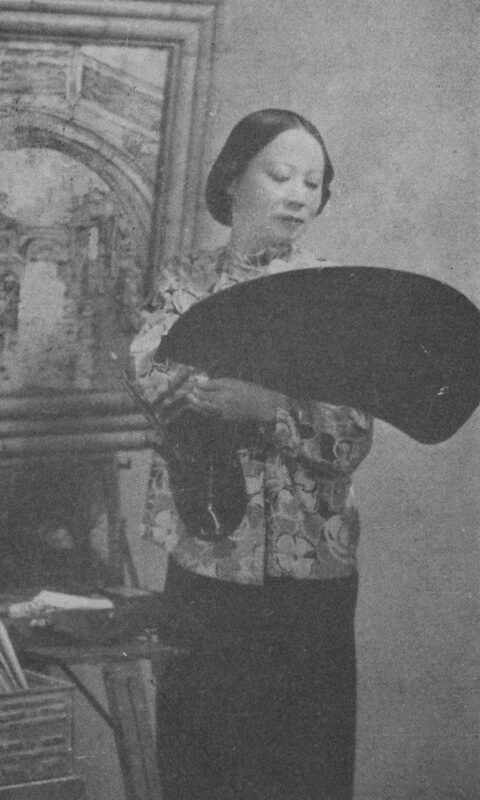
1938 年,南洋美术专科学校(Nanyang Academy of Fine Arts)3 创办。第二次世界大战后,4 复办的南洋美专首次聘请了两名女教师:张荔英(Georgette Chen)与赖凤美(Lai Foong Moi)。她们是新加坡艺术教育的女性先行者,也为此后的新加坡女性艺术教育开辟了空间。
张荔英是第一代新加坡女性艺术家,也是新加坡首位女性艺术教育者。二十世纪上半叶的动荡时局促成了张荔英前半生的每一次远行,她的足迹遍布纽约、巴黎、上海、香港等地。自张荔英 1951 年移居马来亚后,新加坡逐渐成为了她的第二故乡。她秉持 “从生活本身中找到绘画的意义”5 的教学理念,强调绘画应立足于现实观察,而非凭空的想象。因此,她的画笔总是投向身边的日常:竹篮里色彩丰沛的热带水果、喧闹喜庆的马来婚礼,或是客家祖孙三代女性的家庭劳动,都在她的画面中被赋予深情与活力。在《榴莲,山竹,红毛丹》一作中,典型的热带水果取代了欧洲静物画里的常见水果。张荔英的绘画风格受二十世纪二十年代在巴黎求学时期接触的后印象派影响,糅合了塞尚式的构图与笔法:虚起虚收的笔触表现红毛丹外壳的软刺,对榴莲坚硬凸刺的描绘则更显钝拙厚实;而在描绘山竹晶莹乳白的果肉时,又改用平整顺滑的笔法。在持续的探索与实践中,张荔英逐渐形成了融汇中西的绘画语言,其艺术观念也完成了从侨民意识向本土认同的转变。
Footnotes
-
中国南来艺术家,也可称为南洋艺术家,即 20 世纪早期来自中国、定居于马来亚的艺术家。他们的创作融合中国绘画传统和巴黎画派的表现语言。参见张夏帏,《中国南来艺术家与南洋美术:本土意识的萌芽》。 ↩
-
努尔迪亚娜・拉赫马特(Nurdiana Rahmat),《条款与条件:通过早期马来女性艺术家的艺术创作经历重新审视新加坡艺术史》。《潮流期刊》,群岛邂逅特辑(2021)。https://currentsjournal.net/terms-and-conditions ↩
-
南洋美术专科学校是南洋艺术学院的前身,培养了大量的艺术家。2024 年南洋艺术学院与拉萨尔艺术学院(LASALLE)创始联办新加坡艺术大学(UAS), 这是新加坡第一所艺术大学。 ↩
-
第二次世界大战期间英国投降,日本占领新加坡并改其名为 “昭南岛”,新加坡进入日据时代(1942 年至 1945 年)。 ↩
-
张荔英,1957 年南洋艺术学院毕业宣传册,1957 年。 ↩
Women artists in Singapore, including immigrants from China 1 as well as local artists of Chinese, Malay, Indian, and other ethnical backgrounds, have sustained artistic practices ever since the mid-twentieth century. Yet even with formal art school training, women were still denied the luxury of pursuing art as their sole profession. 2 Many Singaporean women artists therefore pursued their practices in dual roles, working simultaneously as educators and artists.
The Nanyang Academy of Fine Arts (NAFA) was founded in 1938. 3 After World War II, 4 the restored Academy hired two female instructors for the very first time: Georgette Chen and Lai Foong Moi. Both were pioneers of art education in Singapore and expanded educational opportunities for female artists.
Georgette Chen is one of Singapore’s earliest woman artists and its first female art educator. The turbulence of the early twentieth century took her to places across the globe, such as New York, Paris, Shanghai, and Hong Kong. After relocating to Malaya in 1951, Singapore gradually became her second home. Guided by her conviction that drawing and painting must come “from life itself,” 5 Chen insists that paintings should be grounded in observations of the real world rather than imaginations. Inspired by scenes of daily life — baskets of brightly colored tropical fruits, festive Malay weddings, and the domestic labors of three generations of Hakka women — she imbues her subjects with affection and vitality. In Durian, Mangosteen, and Rambutan (c. 1965), Chen replaces the typical fruits of European still life paintings with local tropical produce. Her style reflects the influence of Post-Impressionism, which she encountered while studying in Paris during the 1920s. It blends the compositional structure and varied brushstrokes, as seen in Cezanne’s works. She uses subtle lines to bring out the soft spines of rambutans, blunt gestures to model durian’s hard, spiky shell, and smooth strokes to capture the translucence of mangosteen flesh. Through her ongoing explorations, Chen developed a hybrid visual language that bridges the East and the West, as her artistic consciousness evolved from one grounded in a diasporic perspective to one rooted in local identity.
Footnotes
-
These immigrant artists from China, also known as the Nanyang Artists, migrated to Malaya in the early twentieth century. Their artistic practices integrate the techniques of traditional Chinese painting with the expressive vocabulary of Parisian modernism. See Xiawei Zhang, “Nanyang Art by Artists from China: Emergence of a Local Consciousness,” https://culturepaedia.singaporeccc.org.sg/zh/art/nanyang-art-by-artists-from-china-emergence-of-a-local-consciousness/ ↩
-
Nurdiana Rahmat, “Terms and Conditions: Re-examining Singapore Art History Through the Art Making Experiences of Early Malay Women Artists,” Currents Journal, Archipelagic Encounters (2021), https://currentsjournal.net/terms-and-conditions ↩
-
The Nanyang Academy of Fine Arts has trained generations of artists. In 2024, NAFA partnered with LASALLE College of the Arts to establish the University of the Arts Singapore (UAS), Singapore’s first university of the arts. ↩
-
During World War II, Japan occupied Singapore after Britain’s surrender and renamed it Syonan-to. The island remained under Japanese occupation until 1945. ↩
-
Georgette Chen, Nanyang Academy of Fine Arts Class of 1957 Graduation Booklet, 1957. ↩
赖凤美是南洋美专首位获法国政府奖学金赴巴黎国立高等美术学院深造油画的毕业生。1 她的远行标志着新加坡女性艺术家从本土教育走向海外求学的新起点。第二代女性艺术家学成归国后,女性艺术教育工作者的稀缺状况逐渐好转。这一批女教员包括:版画家陈城梅(Chen Cheng Mei/Tan Seah Boey)、2 庄心珍(Chug Seok Tin)3 与雕塑家韩少芙(Han Sai Por)。4 她们在出国深造前,大多曾就读于南洋美专,或曾师从南洋美专的教员。至二十世纪下半叶,新加坡现代艺术蓬勃发展。除绘画外,女性艺术家在雕塑与版画领域亦多有建树,并积极参与版画系、雕塑系等系别的筹建与教学。5
Footnotes
-
“新加坡国家美术馆宣布其馆藏艺术家将参加第 60 届威尼斯双年展”,新闻稿,新加坡国家美术馆,2024 年 4 月 17 日。 ↩
-
陈城梅(1927–2020,新加坡),画家,她于 1949 年就读于南洋美专,师从第一批南洋画家。“十人画会” 成员之一。 ↩
-
庄心珍(1946–2019,新加坡),版画家及作家,她于 1970 年代初就读于南洋美专,1970 年代末至 1980 年代先后赴英国、法国和美国深造,学习版画艺术。 ↩
-
韩少芙(b. 1943,新加坡),雕塑家,石雕创作常以自然为母题。曾师从安尼施・卡普尔(Anish Kapoor)。 ↩
-
1983 年,从英国学成归国的韩少芙先在南洋女子中学开设艺术选修课程,随后自 1987 年起在南洋美专及拉萨尔 - 新航艺术学院(LaSalle-SIA College of the Arts)兼职授课。1985 年,陈城梅从巴黎带回新加坡第一台专业蚀刻版画印刷机。借助这台印刷机及陈提供的版画油墨和酸腐蚀剂,拉萨尔艺术学院得以成立版画系,并于 1986 年聘请庄心珍教授蚀刻铜版和石版技术,培养了本地首批主修版画专业的学生。 ↩
Lai Foong Moi was the first NAFA graduate to be awarded a French government scholarship to study oil painting at the École Nationale Supérieure des Beaux-Arts. 1 A growing number of Singaporean women artists began to pursue overseas training at the time. The return of these women from their studies alleviated the shortage of female art educators in Singapore. This new generation of women art educators includes printmakers Chen Cheng Mei (also known as Tan Seah Boey) 2 and Chng Seok Tin, 3 as well as sculptor Han Sai Por. 4 Many had studied at NAFA or had been mentored by its faculty before going abroad for further education. By the latter half of the twentieth century, Singapore’s modern art scene was flourishing. Women artists contributed not only to painting but also to sculpture and printmaking. They also played crucial roles in establishing academic departments and educating students in these fields. 5
Footnotes
-
National Gallery Singapore announces the participation of artists from its collection at the 60th International Art Exhibition of La Biennale di Venezia curated by Adriano Pedrosa, Venice, Italy, 17 April 2024. ↩
-
Chen Cheng Mei, also known as Tan Seah Boey (1927–2020, Singapore) was a painter who entered NAFA in 1949 and studied with the first generation of Nanyang painters. She was also a member of Shi Ren Hua Hui (Ten Men Art Group). ↩
-
Chng Seok Tin (1946–2019, Singapore) was a printmaker and writer. She began her formal art training at NAFA in the early 1970s. In the late 1970s and 1980s, she pursued further studies in printmaking in the United Kingdom, France, and the United States. ↩
-
Han Sai Por (b. 1943, Singapore) is a renowned sculptor. Nature is a recurring subject in her stone sculptures. She studied under Anish Kapoor. ↩
-
In 1983, after completing her studies in the United Kingdom, Han Sai Por returned to Singapore and began teaching elective art courses at Nanyang Girls' High School. From 1987 onward, she taught part-time at NAFA and the LaSalle-SIA College of the Arts. In 1985, Chen Cheng Mei returned from Paris with the country’s first professional etching press. With this press, along with the inks and acid-based etching materials she supplied, LaSalle was able to establish its printmaking department. In 1986, LaSalle hired Chng Seok Tin to teach etching and lithography, nurturing the first generation of locally trained printmaking artists in Singapore. ↩
林真金(Kim Lim)是二战后新加坡第一代离散女性艺术家,其创作在跨文化与实验性的语境下展开,探讨光、空间与韵律之间的关系。自 17 岁赴伦敦求学,林真金以其雕塑及版画创作长期活跃于二十世纪中后期的英国艺术界。遗憾的是,在林真金逝世后,她的身影在公共视野中消失了数十年之久。直到近五年,通过三场在英国、新加坡重要艺术机构的大型回顾性展览,1 林真金的作品才重新为人所知。
早期的新加坡女性艺术家以在本土与海外的教育与创作实践为支点,在受限的社会结构中开凿出行动与表达的空间,构成了新加坡女性艺术史的底色。她们的艺术成就也为后来者提供了重要参照,夯实了后辈女性艺术家介入更广阔公共空间与更尖锐社会议题的基础。
Footnotes
-
这三场展览分别是:2020 年泰特不列颠美术馆举办的 “林真金:雕刻与印制”;2023 年赫普沃斯・韦克菲尔德美术馆举办的 “林真金:空间、韵律与光线” ;2024 年新加坡国家美术馆举办的 “林真金:意入有间”。 ↩
Kim Lim is one of the first-generation diasporic women artists from Singapore in the postwar period. Her art practice unfolds in transcultural and experimental contexts, exploring the dynamic relationships between light, space, and rhythm. At the age of 17, she left Singapore to study in London, where she became an active voice in sculpture and printmaking throughout the mid-to-late twentieth century in the United Kingdom. But after her death, her works remained under-recognized in the public sphere for decades. Only in the past five years have major retrospectives in the UK and Singapore revived broader reexamination of her artistic legacy.1
Early Singaporean women artists leveraged both local and overseas education and creative practice to carve out spaces for action and expression within a constrained social framework, forming the foundational layer for a feminist art history in Singapore. Their artistic achievements also offered vital reference points for subsequent generations of women artists, who would go on to intervene in public discourses and confront pointed social issues.
Footnotes
-
These retrospectives are: “Kim Lim: Carving and Printing” at Tate Britain in 2020, “Kim Lim: Space, Rhythm & Light” at The Hepworth Wakefield in 2023, and “Kim Lim: The Space Between” at the National Gallery Singapore in 2024. ↩
扬声合唱
Becoming A Chorus
二十世纪七十年代观念艺术的兴起被看作是新加坡现代艺术向当代艺术的转折。1 同时期,新加坡女性艺术家开始批判家庭与教育体系中女性劳动长期得不到制度性承认的现实,从观察者的角色逐渐转向企图改变社会与权力结构的行动者。她们通过艺术实践揭示女性长期承担的 “看不见的工作”(invisible work)、2 抵抗结构性不平等,并持续为个体经验与女性集体记忆发声。
1991 年,三位女性艺术家 苏珊・维克托(Suzann Victor)、苏西・琳函(Susie Lingham)和 Han Ling 3 联合建立了 “第五通道艺术空间”(5th Passage Artists Ltd)。作为东南亚最早的女性主义艺术团体之一,“第五通道” 致力于调度两种现成资源(readymade resources)⸺其一是诸如购物中心这样新加坡常见的现成公共空间,其二是购物中心里的消费者这样的现成受众。其愿景是成为 “各个领域的所有艺术家的空间⸺演员、音乐家、画家、诗人、雕塑家⸺造就巨人和敢于梦想者的小屋”。4 在其运营的短短 6 年间(1991–1996),“第五通道” 举办展览二十余场、演出三四十场,为处于社会边缘的儿童、女性、酷儿等群体勇敢发声。其实践极具先锋性,开启了新加坡女性艺术家主动进入公共领域的先声。
新加坡国家美术馆近期举办的展览 “新加坡艺事:曲径通幽” 中,展出了苏珊・维克托的早期作品《静物》(Still Life, 1992)。三十余年前,维克托在百汇广场第五通道的白墙上安置了两百根新鲜的茄子。随着时间的流逝,茄子逐渐腐烂、脱落,艺术家则不断补充新的茄子。她以戏谑的方式揭示社会空间潜藏的性化逻辑。正如艺术家所言,当我们意识到空间本身带有性别化的特征时,茄子在腐败过程中所显露的失去生殖力的状态,也似乎隐喻了阳具象征的衰退与父权结构可能的崩解。
在 2025 年的展览版本中,茄子被安置在展厅外的走廊里,却意外被人 “偷走” 了。5 虽然无从得知是谁,又为何摘走了茄子,但这意外状况也成为了作品新的注脚。苏珊・维克托的创作在不同时代激起的舆论涟漪,展现了其与现实持续对话的生命力。
Footnotes
-
谢世良、辛友仁主编,《历史、实践、介入:新加坡当代艺术》,拉萨尔艺术学院,2016 年,第 6-7 页。 ↩
-
1987 年,女性主义学者阿琳・卡普兰・丹尼尔斯(Arlene Kaplan Daniels)提出 “看不见的工作”(invisible work)概念,描述被文化和经济贬值的女性无偿劳动,包括但不限于家务、情绪与照护劳动,及更广泛的非再生产劳动。 ↩
-
黄向京,《联合早报》,《第五通道艺术空间展 十艺术家追忆似水年华》,2021。 ↩
-
1994 年对于 “第五通道艺术空间” 的艺术家而言是一个带有痛苦感的转折点。酷儿艺术家黄新楚的行为艺术作品《兄弟藤》引发舆论风波,艺术家本人被捕入狱,空间遭受巨大影响。在严苛的禁令下,新加坡行为艺术陷入十年的限制时期。所有行为艺术项目都需提前提交剧本用于审查,且无法获得国家艺术基金。 ↩
-
新加坡国家美术馆内 苏珊・维克多的作品《茄子》被游客偷走,《海峡时报》,2025 年 8 月 5 日。 ↩
The rise of conceptual art is recognized as a shift from modern to contemporary art in 1970s Singapore. 1 During this same period, Singaporean women artists started to confront the lack of institutional recognition for women’s labor in domestic and educational settings. They moved from passive observers to active agents challenging social and power structures. Their practices exposed the burdens of “invisible work”2 long shouldered by women, resisted structural inequalities, and brought visibility to women’s personal experiences and collective memories.
In 1991, three female artists—Suzann Victor, Susie Lingham, and Han Ling—jointly established the 5th Passage Artists Ltd, one of Southeast Asia’s earliest feminist artist initiatives. The collective sought to mobilize two forms of ready-made resources in Singapore: public spaces such as shopping malls and consumers as a ready-made audiences. Its vision was to become “a space for artists of all disciplines—actors, musicians, painters, poets, sculptors—a haven for both giants and dreamers.”3 During its brief six years of operation (1991–1996), 5th Passage held over twenty exhibitions and thirty to forty performances, giving a courageous voice to socially marginalized groups such as children, women, and queer communities.4 Its practice was highly avant-garde, marking an early precedent for female artists in Singapore to actively engage with the public sphere.
National Gallery Singapore’s recent exhibition “Singapore Stories: Pathways and Detours in Art” featured Victor’s early work Still Life (1992). Thirty years ago, she affixed 200 fresh eggplants on the white walls of 5th Passage’s space in Parkway Parade mall. As the vegetables perished and fell off with the passing time, she put new ones in place. With wit and satire, Victor used the phallic form of the eggplants to call attention to the gendered logic of public space. As she later explained, “[i]n recognizing the gendering of spaces as such, the eventual putrefaction of the eggplants seemingly alludes to their eventual decay and non-generative state.”
In the 2025 iteration for the exhibition, Victor originally placed the eggplants along the corridor outside the gallery. Unexpectedly, they were stolen.5 While it remains unclear who took the eggplants or why, this unforeseen accident becomes a new annotation to the work. The waves of public reaction stirred up across different decades underscore the artwork’s enduring capacity to engage in dialogues with reality.
Footnotes
-
Jeffery Say and Yu Jin Seng, eds., Histories, Practices, Interventions: A Reader in Singapore Contemporary Art (Singapore: Lasalle College of the Arts, Institute of Contemporary Arts Singapore, 2016), p6–7. ↩
-
In 1987, feminist scholar Arlene Kaplan Daniels introduced the concept of “invisible work” to describe unpaid labor performed by women that is culturally and economically devalued. This includes, but is not limited to, housework, emotional and caregiving labor, as well as broader forms of non-reproductive work. ↩
-
Xiangjing Huang, “The 5th Passage Art Space: Ten Artists Search for Lost Time,” Zaobao, 2021. ↩
-
The year 1994 marked a painful turning point for artists associated with the collective. Queer artist Josef Ng’s performance work Brother Cane sparked a public outcry, leading to the artist’s arrest and imprisonment, and causing significant repercussions for the collective itself. In the aftermath, the Singapore government imposed strict restrictions on performance art for the next decade. Artists were required to submit scripts for prior approval before any presentation of the performance, and state funding for performance art was completely withdrawn. ↩
-
“Eggplants in National Gallery Singapore work by Suzann Victor stolen by visitors.” The Straits Times, August 5, 2025. ↩
协奏日常
A Concerto of the Everyday
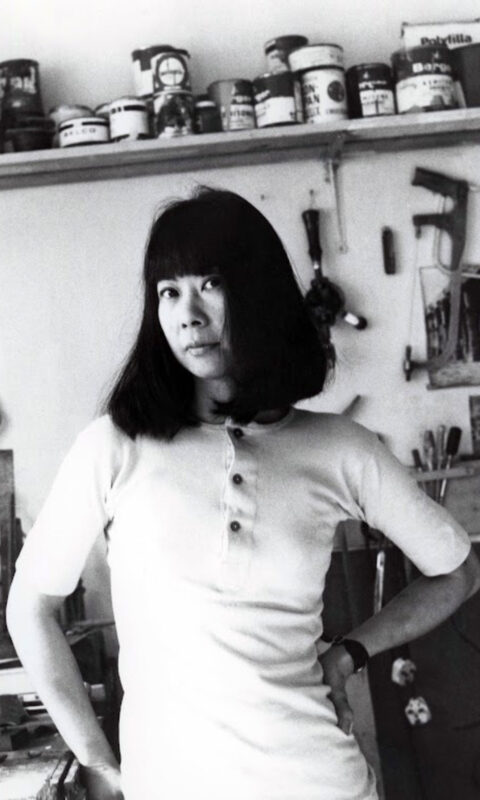
作为新加坡观念艺术的先行者,王良吟(Amanda Heng) 自 1980 年起就通过表演、装置、社会参与式艺术实践,直面公共议题。她强调女性艺术家群体意识的构建,策划了包括 “女性与她们的艺术”(1991)、“女性论女性”(1997)等展览,为女性艺术家的集体表达创造了重要平台。1999 年,王良吟发起了新加坡首个由艺术家运营的女性团体 “WITA”(Women in the Arts),即 “艺术里的女人”。WITA 旨在促成一种去中心、反传统父权制、以协同为核心的女性艺术家网络。 1
王良吟的行为艺术创作多以集体艺术行动与社群对话为核心。在《让我们聊聊吧》(Let’s Chat,1996) 中,艺术家与参与者们围坐在圆桌旁 “择豆芽”。这一项目的初衷是重建本地妇女在组屋公共厨房里的日常⸺备菜、喝茶、分享家长里短。随着时间的推移,餐桌中间堆成小山似的豆芽逐渐减少,人与人之间的联结却随之慢慢增长起来。由 WITA 策划的社区项目 “家务计划”(The houseWORK Project,2003) 则希望提升人们对家务劳动及其从业者的认可与尊重, 2 揭示被忽视的日常实践如何构筑社群亲缘性,并重申女性经验在维系社会韧性中的基础性作用。
Footnotes
As a pioneer of conceptual art in Singapore, Amanda Heng has been consistently addressing public issues through performance, installation, and socially engaged art practices since the 1980s. Central to her artistic vision is the cultivation of collective consciousness among women artists. She curated landmark exhibitions such as “Women and Their Arts” (1991) and “Women About Women” (1997), both of which created critical platforms for women artists’ collective expression. In 1999, she founded WITA (Women in the Arts), the first artist-run women’s collective in Singapore. WITA aims to build a decentralized, anti-patriarchal, and collaborative network of women artists.1
Heng’s performance works often emphasize communal action and dialogue. In Let’s Chat (1996), she arranged participants to sit together at a round table and sort bean sprouts. The project seeks to reconstruct the familiar domestic routines of women in the shared kitchens of Singapore’s public housing estates, where they prepare meals, sip tea, and gossip. As the pile of bean sprouts gradually diminishes, interpersonal bonds deepen. WITA’s community project The houseWORK Project (2003) hopes to enhance appreciation and respect for housework and those who perform it every day.2 It reveals how overlooked everyday practices help forge communal bonds, while reaffirming the foundational role of women’s experiences in sustaining social resilience.
Footnotes
-
To avoid replicating the traditional patriarchal organizational structure, WITA never formally registers itself as an institution. Instead, it has continued to operate in a fluid, open, and spontaneous form. As such, WITA can also be understood as a programme of collaborative projects by women artists in Singapore. ↩
-
In Singapore, foreign domestic workers is a primary labor force in the household sector. The domestic service industry is rife with invisible labor and exploitation. ↩
而在《让我们走路吧》(Let’s Walk,2000)中,王良吟邀请观众与艺术家在新加坡街头手持镜子倒退着走路,嘴里叼着一只高跟鞋。他们怪异的姿态引起了路人的瞩目。这一行为旨在反思 1997 年亚洲金融危机期间,职业女性所面临的多重社会压力。在经济下行期,女性首当其冲地面临失业风险;而在以制造业与建筑业为主的重劳动力导向 “经济刺激计划” 中,国家政策几乎只关注男性的就业需求,系统性地忽视了女性的劳动与经济角色。这导致大批女性被迫回归家庭或转向服务性行业, 1 进而引发了女性被性化与客体化的社会风潮。
Footnotes
-
阳阳。外来族群影响下的东南亚妇女的经济角色:历史的探源 [J].* 东南亚纵横 *,2011 (2):80-85。 ↩
In Let’s Walk (2000), Heng invited audience members to walk alongside her in the streets of Singapore. Each participant held a mirror and walked backward, with a high heeled shoe gripped between their teeth. Their unsettling behavior drew curious glances from passersby. This performance responded to the layered social pressures faced by professional women during the 1997 Asian Financial Crisis. In the wake of the economic downturn, women were among the first to experience job insecurity and layoffs. Yet the Singapore government’s initiatives to stimulate economy prioritized male-dominated industries such as manufacturing and construction. The disproportionate attention to men’s employment needs systematically marginalized women’s labor and economic roles. Many women were pushed back into the domestic sphere or the service sector,1 a transition that exposed them to increased sexualization and objectification.
Footnotes
-
Yang Yang, “Economic Role of Southeast Asian Women under the Influence of the Foreign Ethnic Group: Origin of the History,” Crossroads: Southeast Asian Studies, 2011(2):80-85. ↩
从择豆芽到行走,王良吟所选择的行为都极其日常,这看似反映了一种审美取向,但其实也可被看做一种机智的策略性斡旋。日常行为本身的 “无害化” 和 “非暴力” 特质,使其能在审查制度下存续,其中却也蕴含着深刻的政治洞见,并为颠覆性的表达创造了空间。
《新加坡女孩》系列(Singirl,2000)以艺术家本人为蓝本,她身着新加坡航空蜡染卡岜雅(Batik kebaya)制服出现在游客鲜少光顾的街头巷尾,双手交叉于身前,露出八颗牙齿的微笑。作品批判了 “新加坡女孩(Singapore Girl)” 1 这一在国家品牌化进程中被商品化的女性面孔。而在《新加坡女孩(在线)》(Singirl online,2021)中,王良吟邀请女性参与者拍摄她们的臀部,并建立了一个网站来展示这些照片。这一颠覆 “新加坡女孩” 恭顺形象的大胆挑衅,使网站一经上线便引发舆论争议。 2
Footnotes
Heng often incorporates mundane tasks into her works, such as sorting bean sprouts or walking. While these actions may seem to reflect an aesthetic preference, they also serve as clever and strategic negotiations. The seemingly “harmless” and “nonviolent” nature of everyday activities enables her practice to persist under strict censorship. Yet these quotidian gestures carry profound political insight, creating subtle spaces for subversive expression.
In Singirl (2000), Heng put on the batik kebaya uniform of Singapore Airlines and appeared in the streets that attract few tourists. Her hands were neatly folded in front of her body and she wore the airline’s signature eight-tooth smile. The work critiques the “Singapore Girl”—a female image that has been commodified as part of Singapore’s national branding.1 In a follow-up project, Singirl Online (2021), Heng invited female participants to photograph their buttocks and built a website to show these pictures. This provocative inversion of the Singapore Girl’s modest, submissive image immediately sparked public controversy upon the launch of the website. 2
Footnotes
-
The “Singapore Girl” is a branding concept introduced in 1972 by advertising executive Ian Batey. The image of an Asian woman dressed in a batik uniform, known as sarong kebaya, has become the most iconic symbol of Singapore Airlines. Yet it reinforces gendered stereotypes in Singapore’s national image, portraying the “elegant, warm, and service-oriented Singapore Girl” as its defining figure. ↩
-
As the website featured photographs of women’s buttocks, it sparked controversy over issues of pornography, privacy, the sexualization of women, and potential criminal risks. Unlike in the Brother Cane incident in 1994, the National Gallery Singapore issued a statement on social media supporting the artist's position and encouraged public dialogue. ↩
现如今 74 岁的王良吟依然活跃在新加坡及国际艺坛。今年,她的两件新作《让我们聊得更深入》(Let’s Chat Further, 2025)与《退休的 Singirl》(Retired Singirl, 2025)既延续了艺术家过往作品中所探讨的议题,又结合了前沿的增强现实(AR)和人工智能(AI)技术。在《退休的 Singirl》中,艺术家的全息影像在展厅中起坐、踱步、阅读,并通过直播与观众讨论诸如 “新加坡公民的身份认同” 等议题。王良吟的艺术实践既包含对日常生活的温柔转化,也不乏带有挑衅意味的辛辣表达。无论采取何种媒介或方式,她的创作始终传达出对女性处境的深入思考与对社会的深切关怀。
Now 74, Heng remains an active presence in Singapore’s and the international art scene. Her two new works Let’s Chat Further (2025) and Retired Singirl (2025) revisit key themes in Heng’s oeuvre while integrating cutting-edge Augmented Reality (AR) and Artificial Intelligence (AI) technologies. In Retired Singirl, a holographic projection of the artist can be seen sitting, standing, pacing, and reading within the gallery space. It also periodically engaged the audience through live streaming to discuss issues such as “the identity of Singaporean citizenship.” Heng’s practice ranges from gentle transformations of the everyday to provocative and incisive confrontations. Regardless of medium or method, her practice has consistently conveyed a deep reflection on women’s conditions and a profound concern for society.
尾声
Coda
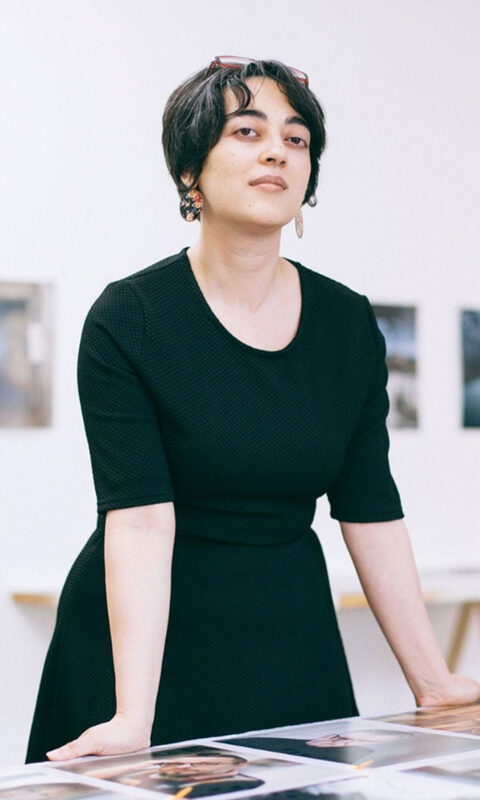
二十一世纪,新一代新加坡女性艺术家的创作不仅延续着对性别、身体与社会劳动的关注,也探讨知识与权力、文化与记忆、殖民与后殖民境况等议题。例如,舒比吉・拉奥(Shubigi Rao) 的跨媒介长期项目《纸浆》(Pulp,2014 至今)追溯书籍销毁、审查制度和其他形式的压迫的历史,思考书籍作为象征和抵抗的力量;陈彦云(Yanyun Chen)的创作探讨华裔家族代际传承间蕴藏的记忆、传统、伤痛与暴力;扎琳娜・穆罕默德(Zarina Muhammad) 以东南亚地区的魔法–生态女性主义为方法论,反思殖民叙事中被系统性抹除的记忆与声音,探索人类与土地、身体与灵性之间的互依关系。1
Footnotes
-
Adeline Chia,《扎琳娜・穆罕默德的生态女性主义巫术》(Zarina Muhammad’s Ecofeminist Sorcery).ArtReview Asia,2022 年 11 月 3 日,https://artreview.com/zarina-muhammad-eco-feminism-magic-sorcery/。 ↩
A new generation of Singaporean women artists in the twenty-first century continues to explore questions of gender, the body, and social labor, while also engaging with issues of knowledge and power, culture and memory, as well as colonialism and postcolonialism. Through her decade-long multimedia project Pulp (2014–present), Shubigi Rao traces the history of book destruction, censorship, and other forms of repression, reflecting on books as symbol and resistance. Yanyun Chen’s explores the memories, traditions, traumas, and violences embedded in intergenerational transmission within Chinese families. Zarina Muhammad employs a Southeast Asian magico-ecofeminist methodology to reflect on memories and voices systematically erased by colonial narratives, while exploring the interdependent relationships between humans and land, and between body and spirit.1
Footnotes
-
Adeline Chia, “Zarina Muhammad’s Ecofeminist Sorcery.” ArtReview Asia, 3 Nov. 2022, https://artreview.com/zarina-muhammad-eco-feminism-magic-sorcery/. ↩
而新一代艺术史研究者们亦发力挖掘新加坡女性艺术家的更多档案资料,为沉默的历史重构声场。女性艺术家长期被东南亚主流艺术史边缘化⸺她们往往仅作为艺术家的妻子、助手及模特出现在艺术史的叙事中。1 以马来艺术家罗哈妮・伊斯梅尔(Rohani Ismail)为例,她是张荔英代表作《罗哈妮》(Rohani,1963)的主角。观众或许对这幅美丽的肖像画记忆深刻,却鲜少人了解罗哈妮本人的故事。艺术史研究者努鲁尔・凯依莎(Nurul Kaiyisah)的 “未曾遗忘者” 项目(Yang Tidak Lupa,2022)2 旨在探索 20 世纪 60 年代至 90 年代,马来亚与新加坡艺术界中追溯女性身份的多重路径,同时也为将来在新加坡艺术史中展开的女性主义介入留出空间。项目通过罗哈妮在南洋美专时期的新闻剪报、展讯、照片及其与恩师张荔英的通信,再现了一个更立体的罗哈妮⸺她不仅仅是张荔英画中的年轻女子,还是多元资源艺术家协会(Angkatan Pelukis Aneka Daya)3 的创始成员,亦是新加坡马来裔女性艺术家先驱之一。
Footnotes
-
努鲁尔・凯依莎(Nurul Kaiyisah),“Yang Tidak Lupa”(“The one who did not forget” / 未曾遗忘者)(2022),新加坡国立大学美术馆。 ↩
-
1962 年,多元资源艺术家协会(Angkatan Pelukis Aneka Daya)成立,简称 APAD,英文名称为 Association of Artists of Various Resources, 标志着新加坡最早的马来裔艺术家组织诞生。在此之前,活跃于新加坡艺坛的艺术家多为华裔艺术家和华人艺术社团。新加坡最早的华人美术团体可追溯至 1909 年海峡侨生成立的 “业余绘画协会”。参见张夏帏,《新加坡华人美术团体》。 ↩
A new generation of art historians is also working to unearth more archival materials on Singaporean women artists, reconstructing a soundscape for histories once silenced. Women artists have long been marginalized in Southeast Asia’s dominant art historical narratives. They often appear only as wives, assistants, or models rather than as creators in their own right.1 One such example is the Malay artist Rohani Ismail, who sat for Rohani (1963), one of Georgette Chen’s most iconic portraits. While many viewers may be familiar with this beautiful painting, few know of Rohani’s own artistic journey.
Art historian Nurul Kaiyisah’s project Yang Tidak Lupa (The One Who Did Not Forget, 2022) explores the multiple pathways through which female identity was negotiated in Malaya and Singapore’s art world from the 1960s to the 1990s.2 It also intends to open space for future feminist interventions in writing Singapore’s art history. Through Rohani Ismail’s press clippings, exhibition flyers, photographs, and her correspondence with her mentor Georgette Chen from her days at NAFA, the project reconstructs a more multifaceted portrait of Rohani. She was not only the young woman in Chen’s paintings, but also a founding member of the Angkatan Pelukis Aneka Daya (Association of Artists of Various Resources),3 and one of Singapore’s pioneering Malay women artists.
Footnotes
-
Rahmat, “Terms and Conditions,” Currents Journal. ↩
-
Nurul Kaiyisah, Yang Tidak Lupa (The One Who Did Not Forget), 2022, National University of Singapore Museum. ↩
-
In 1962, the Angkatan Pelukis Aneka Daya (APAD), or Association of Artists of Various Resources, was founded. It is the first Malay artist organization in Singapore. Prior to this, the local art scene was dominated by ethnic Chinese artists and Chinese art associations. The earliest Chinese art society in Singapore can be traced back to 1909, with the establishment of the “Amateur Painting Association” by Peranakan Chinese artists. See Xiawei Zhang, “Art Societies formed by Chinese in Singapore.” ↩
近年来,新加坡以印度–太平洋地区为锚点向外辐射,逐渐成为泛东南亚乃至全球瞩目的新兴艺术枢纽。在政府基金及新加坡国家艺术理事会(National Arts Council)的政策支持下,新加坡双年展、马来艺术节(Festival Budaya Malaysia)、新加坡艺穗节(Singapore Fringe Festival)等国际性艺术节展相继兴起。同时,诸如新加坡艺术博览会(Art SG)、Tanoto Art Foundation 等商业平台与非营利机构的建立,进一步丰富了新加坡的艺术生态。女性以艺术家、策展人、研究者、赞助人、藏家等多种角色参与其中,早已成为当代新加坡文化图景的积极塑造者。
从二十世纪上半叶至今,新加坡女性艺术家的发声绵延不绝⸺从张荔英、赖凤美等艺术开拓者,到王良吟、舒比吉・拉奥等当代实践者⸺她们的创作从校园渗入城市,从故土走向全球,持续建构着属于新加坡女性艺术家的艺术声场。(编辑:秋韵;翻译:赵文睿)
In recent years, Singapore has emerged as a rising arts hub linking the Indo-Pacific region and gained growing global significance. Supported by state funding and the National Arts Council, major international arts events have flourished in Singapore, such as the Singapore Biennale, Festival Budaya Malaysia, and Singapore Fringe Festival. The establishment of commercial platforms like ART SG and not-for-profit institutions such as the Tanoto Foundation has further enriched the country’s art ecosystem. As artists, curators, researchers, patrons, and collectors, women have actively shaped Singapore’s cultural landscape.
Since the first half of the twentieth century, Singaporean women artists have insisted on making their voices heard. From pioneers like Georgette Chen and Lai Foong Moi to contemporary practitioners such as Amanda Heng and Shubigi Rao, generations of women have carried their practices from the classroom to the streets, from local communities to international stages. Together, they have constructed an enduring artistic soundscape for women artists in Singapore. (Editor: Ara Yun Qiu; Translator: Wenrui Zhao)
相关艺术家
Related Artists
作者简介
AUTHOR’s biography
陈看(b. 1999,上海)是一名独立策展人及版画创作者,目前工作生活于新加坡。她先后在上海大学上海美术学院完成版画专业的本科及硕士学业,并于 2024 年以优异成绩毕业于格拉斯哥艺术学院当代策展实践硕士课程。
陈看的实践围绕 “款待” 的理念展开,以参与式观察作为方法论,聚焦当代策展中的语言正义和创意关怀。她近期策划的项目包括:聚焦东亚女性艺术家的访谈项目 “言之有误:未翻译艺术家采访”(2024 至今); 探索新加坡多元文化的写作项目 “人造月光与无尽夏”(2025 至今);以及展览 “策展人不在家”(一又二分之一空间,上海,2025)。
Chen Kan (b. 1999, Shanghai) is an independent curator and printmaker who currently lives and works in Singapore. Chen earned both her Bachelor’s and Master’s degrees in Printmaking from the Shanghai Academy of Fine Arts, Shanghai University, and completed a Master’s in Contemporary Curatorial Practice with distinction at Glasgow School of Art in 2024.
Chen’s practice centers on the concept of “hospitality,” employing participatory observation as a methodology and focusing on linguistic justice and creative care in contemporary curating. Her recent projects include the interview series Yán Zhī Yǒu Wù: An Untranslated Artist’s Interview (2024–present), which focuses on East Asian women artists; the writing project Artificial Moonlight and Endless Summer (2025–present), which explores Singapore’s multiculturalism; and the exhibition The Curator Is Not Home (One and a Half Space, Shanghai, 2025).