卷曲和遗落的技术时间
Curled and Obsolescent Technological Time

“无女性世界” 的叙事,是一套关于将女性排除在科学和技术领域之外的叙事,也是将科学和技术编码为 “男性” 这一行动的产物。
—— 玛丽・希克斯(Marie Hicks),《关于 “容纳” 的技术》(Technologies of Inclusion)1
Footnotes
-
Hicks, Marie. Technologies of Inclusion: Gender in the Information Society, ed. Knut Holtan Sørensen, Wendy Faulkner, and Els Rommes. Technology and Culture 55, no. 2 (2014): 509–10. https://doi.org/10.1353/tech.2014.0042 ↩
The “world without women” narrative is largely a story about the history of the exclusion of women from scientific and technical fields, and about the consequences of this exclusion for the symbolic coding of technology as “masculine.”
—— Marie Hicks, Technologies of Inclusion 1
Footnotes
-
Hicks, Marie. Technologies of Inclusion: Gender in the Information Society, ed. Knut Holtan Sørensen, Wendy Faulkner, and Els Rommes. Technology and Culture 55, no. 2 (2014): 509–10. https://doi.org/10.1353/tech.2014.0042 ↩
在开始思考 “女性和科技艺术” 这个命题时,我正在读一本讲述约翰・冯・诺依曼(John von Neumann)的妻子克拉拉・诺伊曼(Klára Dánvon Neumann)的书。她是最早的计算机程序员之一,也和其他女性(她们可能是数学家的 “太太们”,可能是在摩尔学校受过培训的学生,也可能自己就是科学家)一起参与了早期计算机 ENIAC(Electronic Numerical Integrator And Computer,电子数字积分计算机)的发展。在这段极为丰富的历史中,女性承担了机器操作的工作,撰写了一套计算机操作的培训手册,并写下了可以在 ENIAC 之外的计算机上也可以运行的模拟程序。但就像许多其他科学技术史中的女性一样,克拉拉的故事散失在零星的文档和私人通信中,从未在历史上以主体的形式被讲述。媒介研究学者全喜卿(Wendy Chun)犀利地指出,将这些女性宣称为 “第一批程序员”(正如很多计算机课程会做的),实际上忽略了操作员、编码员和分析员之间的关系,亦忽略了这个群体本身的复杂性和多样性。
计算历史学家内森・恩斯曼格(Nathan Ensmenger)分析了早期计算机发展中的性别分工(女性被派遣 “操作机器”,而男性 “设计机器”),并指出在 20 世纪 60 年代后,女性逐渐被驱逐出了计算机编程的领域 1。这个故事的背后不仅仅是计算机的性别史,也折射了包括计算机在内的一系列技术内部所存在的知识生产的等级制度和父权制权力结构。尽管麦肯齐(Donald MacKenzie)等学者曾论述过 “当我们聊到某一项具体技术的时候,不同的人群会对这些技术的特征产生完全不同的理解”2,但这种差异性,在实际的技术生活中并未被充分考虑。欧登齐尔(Oldenziel)等人曾经一针见血地指出,当我们在讨论机器成为 “科技” 的主要隐喻、模型和物质代表的同时,我们也在讨论科技成为男性权力的象征 3。
Footnotes
-
Ensmenger, Nathan. Making Programming Masculine. Gender Codes, 2010, 115–41. https://doi.org/10.1002/9780470619926.ch6 ↩
-
König, Wolfgang. Mackenzie Donald Und Wajcman Judy, the Social Shaping of Technology, 1985, Nachdenken über Technik, 2013, 268–71. https://doi.org/10.5771/9783845269238-268 ↩
-
Oldenziel, Ruth. Object/ions: Technology, Culture and Gender, The Material Culture Reader, ed.Victor Buchli (Oxford: Berg), 56 ↩
When I began contemplating the topic of women, art, and technology, I was reading a book about Klára Dán von Neumann, the wife of John von Neumann. She was one of the earliest computer programmers and participated in the development of the early computer ENIAC (Electronic Numerical Integrator And Computer). Alongside her in developing the ENIAC were many other women, who were the wives of mathematicians, students trained at the Moore School of Electrical Engineering at the University of Pennsylvania, or scientists themselves. In this rich history, women operated machines, authored a set of training manuals, and wrote simulation programs that could run on computers other than the ENIAC. However, like many other women in the history of science and technology, Klára’s story is lost in scattered papers and private correspondence, and only serves as a marginal note to the main narrative. Media studies scholar Wendy Chun sharply points out that proclaiming these women as the “first programmers” (as many computer science courses do) in fact overlooks the relationships between operators, coders, and analysts, as well as the complexity and diversity within this group.
Nathan Ensmenger, historian of computing, has studied the gender division of labor in the early development of computers, and shown that women were assigned to operate machines, while men were tasked to design them 1. After the 1960s, women were gradually excluded from computer programming. These insights not only reveal the gendered history of computers, but also reflect the hierarchy of knowledge production and patriarchal power structures inherent in a diverse range of technologies, including computing. Although scholars like Donald MacKenzie have argued that different groups can have completely different understandings of the characteristics of a particular type of technology, such discrepancy is often not adequately considered in actual technological practice 2. Ruth Oldenziel and other scholars have astutely noticed that in our discussions about how machines become the primary metaphor, model, and material representation of “technology”, we are also discussing technology becoming a symbol of male power 3.
Footnotes
-
Ensmenger, Nathan. Making Programming Masculine. Gender Codes, 2010, 115–41. https://doi.org/10.1002/9780470619926.ch6 ↩
-
König, Wolfgang. Mackenzie Donald Und Wajcman Judy, the Social Shaping of Technology, 1985, Nachdenken über Technik, 2013, 268–71. https://doi.org/10.5771/9783845269238-268 ↩
-
Oldenziel, Ruth. Object/ions: Technology, Culture and Gender, The Material Culture Reader, ed.Victor Buchli (Oxford: Berg), 56 ↩
克拉拉的故事背后的一个关键问题,是缠绕在女性主义科学技术与社会研究(Science, Technology and Society,下文简称 STS)领域的一个持久话题:一个关于 “容纳”(inclusion)和 “排除”(exclusion)的讨论 —— 究竟什么被容纳在 “科学和技术” 的内部,什么被排除在外?为何科技倾向于被建构为 “男性的” 抑或有男性色彩的?“谁从中受益?谁的知识在社会中扮演角色?”—— 这个问题的答案显然不仅仅是关于性别关系的讨论,也关于科学和技术知识生产中存在的种种权力结构,关于我们怎么理解身体、客观性,以及自然和文化之间的界限 1,甚至科学与技术之间的界限 —— 许多女性主义 STS 研究者,如塞西莉娅・阿斯伯格(Cecilia Åsberg)和尼娜・莱克(Nina Lykke),也试图祛魅流行话语中存在的一种对纯粹的、政治上无罪的基础科学的想象,和 “科学中性,但技术有善恶” 的论述。
Footnotes
-
Rouse, Joseph. Engaging Science, 1996. https://doi.org/10.7591/9781501718625 ↩
The issue around inclusion and exclusion that underlies Klára’s story is a persistent concern in the field of feminist science and technology studies (STS). What is included within science and technology, and what is excluded? Why technology tend to be constructed as male or masculine? Who benefits from it? Whose knowledge actually serves the society? The answers are not just about gender relations. They should also consider factors like the power structures shaping the production of scientific and technological knowledge, the ways in which we understand the body and objectivity, the boundaries between nature and culture, and even between science and technology 1. Feminist STS researchers, such as Cecilia Åsberg and Nina Lykke, also attempt to rebuke the popular imagination of basic science as pure and politically innocent, as well as the discourse that “science is impartial, but technology is not.”
Footnotes
-
Rouse, Joseph. Engaging Science, 1996. https://doi.org/10.7591/9781501718625 ↩
从唐娜・哈拉维(Donna Haraway)的 “情境化知识”(situated knowledges)和 “部分化的真相”(partial truth),到凯伦・巴拉德(Karen Barad)的 “散射分析”(diffractive analysis),女性主义 STS 研究者所提出的诸种思考框架不仅指向了西方科学中常见的二元论和性别语言建构,也对身体和物质性提出了极为重要的反思 —— 这既关联到 20 世纪 70、80 年代的生态女性主义和医疗实践批判(比如《我们的身体,我们的自己》1),也衔接到 90 年代的赛博格研究和后人类讨论。在边界弥散的 “艺术与科学、技术” 领域中,我们也可以追溯到类似思考的痕迹:当科技开始被视为一种驱动性的经济社会力量时,参与到科技话题的艺术创作者们,开始关注其中存在的差异性和间隙地带 —— 人与非人之间、身体与机器之间、真实和虚拟之间、技术与自然之间,正如凯瑟琳・海耶斯(Katherine Hayles)在 1995 年曾写道的:“站在人类与后人类的分水岭上,赛博格既看向过去,也看向未来。” 1992 年,一个名为 VNS Matrix(VNS 矩阵)的艺术家小组延续这段赛博格宣言,发布了《21 世纪赛博女性宣言》,宣称要对父权的技术进行扰动和破坏,这一宣言以图片的形式,在 LambadaMOO(一个存在于互联网早期的,基于文本的虚拟世界)上广为传播。这份宣言对泰德・尼尔森(Ted Nelson)、斯图尔德・布兰德(Stewart Brand)等人所提出的一种极为乐观的互联网乌托邦主义和自由赛博空间的想象提出了怀疑,对于 VNS 矩阵来说,赛博空间对身体而言,从来不是自由的。参与者之一约瑟芬・斯塔斯(Josephine Starrs)在 1992 年写道:“很多技术爱好者钻到机器里头,以图忘记自己的肉身。在我们的作品里,我们从不告别身体,身体对女性主义者来说,是重要的现场。”2 而拉伯利亚・库伯尼克斯(Laboria Cuboniks)的 Xenofeminism(亦译作 “异女性主义”3),则更为激进地关注将科技视作服务于 “进步” 的手段这样一种论调,和这种思维方式所隐藏的性别政治结构。在博尼亚・科尼奥尔(Bogna Konior)等研究者看来,Xenofeminism 的内核在于通过剥离技术的零件、重新组装和定位,与业已存在的技术(包括思想技术)建立某种共生或寄生关系。
Footnotes
The conceptual frameworks that feminist STS researchers have proposed, such as Donna Haraway’s “situated knowledges” and “partial truths” and Karen Barad’s “diffractive analysis”, not only challenge the binary thinking and gendered language common in Western science, but also offer critical reflections on the body and materiality. They shape ecofeminism and critiques of medical practices in the 1970s and 1980s (such as Our Bodies, Ourselves) and the discussions of cyborg and posthumanism in the 1990s 1. These intellectual approaches also influence artists’ exploration of the porous boundaries among art, science, and technology. Viewing technology as a driving economic and social force, they increasingly investigate the differences and gaps between categories such as human and non-human, body and machine, real and virtual, and technology and nature. As Katherine Hayles wrote in 1999, “Like a Janus figure, the skeuomorph looks to past and future, simultaneously reinforcing and undermining both.” In 1992, the artist collective VNS Matrix carried on the cyborg manifesto and released A Cyberfeminist Manifesto for the 21st Century, declaring their intent to disrupt and dismantle patriarchal technologies. The manifesto spread widely as images on LambadaMOO, a text-based virtual world from the early days of the internet. It questioned the highly optimistic imaginations of cyber-utopianism and free cyberspace from figures like Ted Nelson and Stewart Brand. VNS Matrix believed that cyberspace was never free from the body. Josephine Starrs, one of the VNS Matrix members, said in 1992, “Lots of computer technophiles… jack into the machine and want to forget about the body to reject the meat of the body. In our work we’re not finished with the body, the body is an important site for feminists.” 2 Laboria Cuboniks’s more radical Xenofeminism further examines technology as a discourse of progressivism and the gender-political structures embedded in it. 3 According to Bogna Konior, Xenofeminism “strips for parts, reassembles, takes what it wants, hacks and reorients. It wants to develop a symbiotic or parasitic relation to already existing technologies (including those of thought).”
Footnotes
对许多关注身体和技术关系的艺术实践者来说,这条从赛博格到 Xenofeminism 的光谱,也对应着一种对技术进步主义的重思:她们更关注于技术演进中那些混沌的地带、迂回的情况,以及那些被有意识或无意识遗忘、抹除和放弃的部分。对于那些被标注为先锋和前沿的技术进展,许多艺术家亦关注到它可能忽视或掩盖的议题。露西・麦克莱(Lucy McRae)在《未来亲缘》(Futurekin)中描述了一座非常超现实的圆盘状混凝土建筑,这座建筑里所有的成员都是不同年龄层女性,她们面无表情地在厨房工作,看似严谨地在记录数据,抑或用鹅黄色的肥皂擦拭自己的身体。艺术家沿袭了哈拉维在《赛博格宣言》(1985)中关于 “女性从孕育中解脱出来” 的描述,想象了一个 CRISPR 基因编辑技术盛行的时代,女性开始在实验室里培育出复杂的、有感知能力的子宫,并借此反思科技进步的路线对于人类作为一个物种本身将带来的影响。2023 年,艺术家劳伦・李・麦卡锡(Lauren Lee McCarthy)开启了一个极为个人的项目:用 40 周的时间成为一名 “远程代孕母亲”。在这个思辨计划中,她邀请一对父母通过一个应用程序监控她(作为 “代孕母亲”)的饮食、行动、冥想和其他日常行为,并与医生、心理学家、生育专家、代孕母亲、助产士、产科医生和遗传学家密切合作,用一系列短片、表演和装置,讲述了发生的故事。这件作品延续了麦卡锡长期以来对人和机器之控制边界和 “代理” 概念的兴趣(她曾经在一件作品中邀请众包网站 Mechanical Turk 上的零时工远程 “操控” 她的一段约会),并将探讨的重点放在了一系列近年来愈发进入公共讨论的话题:基因工程、辅助生殖和其中潜在存在的关于身体自主权、情感代理和伦理的讨论。在这两个案例里,真正的代孕者并不是艺术家抑或故事里的女性角色,而是技术和女性同构的混合体,甚至是技术本身。人和技术,或者人和机器的主客体关系,在女性主义 STS 研究的框架中,正如性别本身一样,并非水火不容的,包括机器在内的一系列技术可能是一种被建构的 “关系物件”(relational artifacts)—— 此类物件的关系属性在艺术创作中,往往比在实际的科技宣传话语和应用场景中,要更为凸显。
For artists concerned with the relationship between the body and technology, the spectrum from cyborg to Xenofeminism correspondens to the reevaluations of techno-progressivism. These practitioners are more interested in the chaos and detours in technological evolution, and the aspects that are intentionally or unintentionally forgotten, erased, or abandoned. Many also pay attention to the issues that may be overlooked or obscured by technological developments labeled as avant-garde and cutting-edge. In Futurekin, Lucy McRae represents a surreal circular concrete building, the inhabitants of which are women of different ages. They work expressionlessly in the kitchen, enter data with seemingly meticulous care, or wash their bodies with pale yellow soap. She draws on Haraway’s description in A Cyborg Manifesto (1985) of women emancipating themselves from giving birth, envisioning an era when CRISPR gene editing technology is prevalent and women begin to cultivate complex, sentient uteri in laboratories. McRae’s work reflects on the impact of technological progress on human beings as a species. In 2023, artist Lauren Lee McCarthy launched a deeply personal project: to become a “remote surrogate mother” for 40 weeks. In this speculative endeavor, she invited a couple to monitor her role as the “surrogate mother” through an application program, observing her diet, activities, meditation, and other daily activities. McCarthy closely collaborated with doctors, psychologists, fertility experts, surrogate mothers, midwives, obstetricians, and geneticists, using a series of short films, performances, and installations to tell the story. This work continues her long-standing interest in the boundaries between human control and machine control, as well as the concept of agency. She once invited temporary workers on the outsourcing website Mechanical Turk to remotely “control” her during a date. It also scrutinizes the topics that have increasingly entered public discourse in recent years, such as genetic engineering and assisted reproduction, and the issues around bodily autonomy, emotional agency, and ethics involved in these technologies. The real surrogate in both cases is not the artist or the female protagonist, but a hybrid of technology and femininity, and perhaps even technology itself. The feminist STS framework does not see the relationship between humans and technology, and humans and machines as a subject-object binary. Similarly, understandings of gender have moved beyond the binary model. Technologies, including machines, may be seen as constructed relational artifacts. The relational attributes of such artifacts are often more pronounced in artistic creations than in propaganda for technology and actual application scenarios.
女性主义 STS 研究的一个重要观点在于,相较于将技术还原成一套工具,技术和技术物更需要被放置在一套社会和文化关系中被理解,它们亦从来不是政治中立的 ——“容纳” 和 “排除” 之问持续萦绕,非人的身体和意志,那些位于进步叙事之外的线索,也频频进入到关于从社会和关系角度理解技术的话语中。艺术家 刘昕 在《白石》(2021)中试图讨论技术物的身体,在这部影片中,艺术家穿越山谷和村庄,进入中国西南的沙漠,寻找 1990 年代以来坠落的火箭碎片。这段旅程不许诺任何一种结果,正如大量技术在实验和演化过程中的副产品、废弃物和失败,几乎都不被外人所知。在大量以新太空时代为主题的创作中,艺术家敏锐地关注到了太空技术伴生的生态转变(我们的天空既是新太空时代的必争之地,也变得愈发拥挤),并试图提出一种平行叙事:在影片中,“白石” 是一个火箭的坠落体,它促使我们将目光从天空(及其所象征的对外征服)移回地面,并通过这个地外物体在地球上的死亡,重新审视技术自身的寿命。
类似地,龙盼 在她追踪铜元素的《风铃》(2021)和《铜树》(2022)等系列作品中,关注已经成为 “新矿” 的电子产品废弃及回收链条,亦即另一种技术物 —— 非常日常的电子产品和电子元件 —— 的生命路线。无数被淘汰的电子产品成为了回收者的 “金矿”,离散在电动牙刷、智能手机、电视、冰箱和平板电脑里的铜,被从堆积成山的 “电子垃圾矿” 中,再次被提纯出来,其废液则会倒入河流、沉积入田野和广义的土地。与坠地的火箭残骸相比,铜元素的浸润和流转在更加不可见的地方,艺术家通过电解还原,让铜元素重新以铜单质的形态显现,并被铸成风铃置回田间,这条微观层面上关于废弃与淘汰的线索,同样揭示了一种对技术过程中被 “排除” 和忽视之部分的关切。
同样在微观和非人的层面,曹舒怡 在叙事影像《茫茫微光贯穿一切》(2022)中展开了一段微生物与地质构造之间的穿越之旅。故事基于一个未来漫游者在沙漠深处偶然遭遇核废料掩埋遗址的经历,并将古细菌从人类注意力的边缘拉回,想象它成为行星的超级代理。在这件作品中,身体的概念不仅蔓延到了技术物之上,也与地球系统和深层时间交织在一起 —— 更具体地说,是作品原型所在的美国新墨西哥州南部的特拉华沉积盆地自身的 2.5 亿年历史,与建造在其之上的世界上第三座深地质处置工厂(Waste Isolation Pilot Project, WIPP)存储的超铀废料保持放射性的 2.4 万年时间。正如艺术家所言:“我们愈来愈发现自己在多重时间的深层纠缠与共同作用中是如此遥远,边缘化以至于无效。”
这层时间的嵌套也可见于 费亦宁 在《月之滨》(2021~2023)中所展现的仅有一个通用型人工智能(AGI)和一只转基因海牛的世界,这个世界正是 “排除之路” 在遥远将来的反噬 —— 正如艺术家在一次表演性讲座中所引用的:“地球是仅仅被当做由惰性元素组成的巨大机器,非人类生命、部分人类生命和自然都只是无声的资源与仅供使用的景观。”1 这场表演性讲座中,艺术家亦提到数学家艾达・洛夫莱斯(Ada Lovelace)关于分析机的写作,如同克拉拉・诺伊曼一样,她作为 “注释”,存在于计算机的历史里。对 “注释” 者的关照,恰恰也是对被排除的、隐藏的、不具名的广大世界的关照。分析机最终成为了 “无用之物”,在技术的线性时间里被自然脱落的遗存,这种排除甚至也可能是技术自身的绝迹(obsolescence)。
Footnotes
-
Kabir, Ananya Jahanara. “Amitav Ghosh, the Nutmeg’s Curse: Parables for a Planet in Crisis”, Commonwealth Essays and Studies 44, no. 2 (2022). https://doi.org/10.4000/ces.11269 ↩
A crucial viewpoint of feminist STS scholarship is that rather than reducing technology to a mere set of tools, technology and technological objects need to be understood with regard to social and cultural relations. They are never politically neutral. Instead, they persistently perform acts of inclusion and exclusion. Non-human bodies and wills, and aspects outside of progressive narratives, frequently enter into the discourses about technology from social and relational perspectives. Xin Liu explores the embodiment of technological objects in her film The White Stone (2021). She traverses valleys and villages, and enters the deserts in southwestern China in search of rocket debris that has fallen since the 1990s. This journey promises no particular outcome, much like the byproducts, waste, and failures generated in the process of technological experimentation and evolution, mostly unknown to outsiders. In her extensive body of work centered around the new space age, Liu keenly observes the ecological transformations accompanying space technology. Our increasingly crowded sky has become the contested terrain of this new era. Her practice attempts to propose a parallel narrative. The “white stone” in the film’s title is the falling debris of a rocket. Our attention is guided from the sky (a metaphor for the conquest of the outer world) back to the ground. Through the death of this extraterrestrial object on Earth, the artist invites us to reexamine technology’s lifespan.
Long Pan, in her series of works such as Wind Bell (2021) and The Root (2022), focuses on the life trajectory of another type of technological object—the electronic waste and recycling chain. Countless obsolete electronic products have become new “gold mines” for recyclers. The copper contained in electric toothbrushes, smartphones, televisions, refrigerators, and tablets is purified again from the mountains of “e-waste mines”. The waste liquid is then poured into rivers and deposited in fields and lands. Compared to the fallen wreckage of rockets, the infiltration and circulation of the element copper are less visible. Through electrolysis reduction, Long rematerialized the element, which was then cast into wind bells and placed back in the fields. The attention to the abandonment and elimination on such a microscopic level also manifests her care for those that are excluded and overlooked in the technological processes.
Similarly, on a microscopic and non-human level, Shuyi Cao’s narrative film A Vast Shimmer Spans All (2022) leads us onto a journey of traveling between microorganisms and geological structures. A future explorer encounters a buried nuclear waste site in the depths of the desert. The person also attends to ancient bacteria neglected by humans, imagining it as a super-agent of the planet. The concept of the body in this work encompasses technological objects and intertwines with the Earth system and deep time. Specifically, it is based on the 250 million-year history of the Delaware Basin in southern New Mexico, where the world’s third deepest geological repository, the Waste Isolation Pilot Project (WIPP), is located. The super-uranium waste it stores has a radioactive half-life of 24,000 years. “We increasingly find ourselves so distant, marginalized, and invalidated, when entangled in multiple layers of time.” as Cao puts it.
The layering of time is also evident in Fei Yining’s The Moonshore (2021–2023). It presents a world only inhabited by an Artificial General Intelligence (AGI) and a genetically modified manatee. The work encapsulates the blowback of the “path of exclusion” in the future. Inspired by Amitav Ghosh’s ideas, Fei expressed in a performative lecture that the Earth is merely seen as a vast inert repository, where non-human life, certain part of the human life, and nature are silent resources and spectacles to be used1. She also referred to the mathematician Ada Lovelace’s writings on the Analytical Engine. Much like Klára Dán von Neumann, Lovelace exists in the history of computing as an annotation. The attention to such “annotators” can indeed shed light on the excluded, hidden, and unnamed majority. The Analytical Engine ultimately became a useless thing, discarded by the linear time of technology. It is the exclusion that leads to the technology’s obsolescence.
Footnotes
-
Kabir, Ananya Jahanara. “Amitav Ghosh, the Nutmeg’s Curse: Parables for a Planet in Crisis”, Commonwealth Essays and Studies 44, no. 2 (2022). https://doi.org/10.4000/ces.11269 ↩
在 贺子珂 的新片《乱码城市》(2023)中,正处在技术红利期的数据中心也成为了遗落之物,一场数据中心火灾带走了人的记忆,这些当代巨型技术物体,携带着一种同样巨大的不稳定性,嵌套在更复杂和漫长的自然时间里。“海水从这里消失,山川从另一边升起。雨水降下来,灌进地下和山体里面。” 技术在排除和遗弃自然的同时,也在被自然遗弃。故事的主角鸿雁看起来是一名出租车司机,内在其实是一段云端数据驱动的电子人,车上的乘客则是数据中心的管理员。在艺术家看来,“这样的选择可能是因为希望用共情的态度去处理人造物,而不是开发、凝视和展示。”
在这些(和更多)女性艺术家有关科技议题的创作中,科技进步主义的时间线开始卷曲,展开不同的路径,在这些折叠的时间里,我们可以发现一个不再以开发、索取和凌驾形式存在的人与技术之关系,一个重新思考 “容纳” 和 “排除” 的世界,它足够复杂,也足够饱含对遗落的关切 —— 正如克拉拉和艾达是技术史模糊不清的、离散书写的记忆,今天的许多女性艺术家有能力重新找到她们。(翻译:赵文睿)
In He Zike’s new film Random Access (2023), the data center, a booming technology, also becomes a relic, when a fire there takes away men’s memories. These massive contemporary technological objects bear an equally enormous instability, embedded in a complex and prolonged natural time. “The sea disappears from here, and mountains and rivers rise from the other side. Rain falls and seeps into the ground and the mountains.” While technology excludes and abandons nature, it is also abandoned by nature. Hongyan, the protagonist of the story, appears to be a taxi driver. Yet actually, he is a robot driven by cloud data, and the passengers in his car are data center administrators. In He’s view, “such a choice comes out of a desire to treat man-made things with an empathetic attitude, instead of a mere intent to develop, stare at, and display them.”
In the works of these and many other female artists concerning technology, the timeline of technological progress curls, unfolding into different paths. Within these folded times, we can discover a relationship between humans and technology that does not involve exploitation, appropriation, and patriarchy. Rather, it is a world that rethinks “inclusion” and “exclusion”, one that is complex enough and imbued with care for those left behind. While Clara and Ada have been faint and fragmented memories in the narrative of technology’s history, many female artists today are able to rediscover them. (Translated by Zhao Wenrui)
相关艺术家
Related Artists
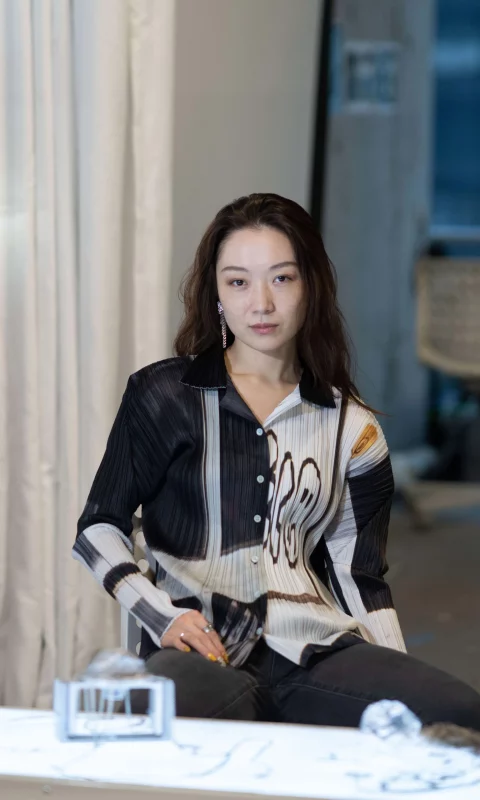
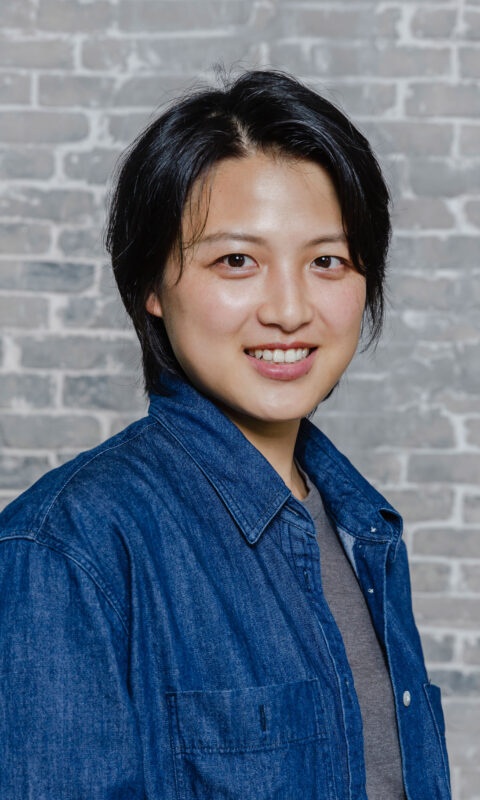


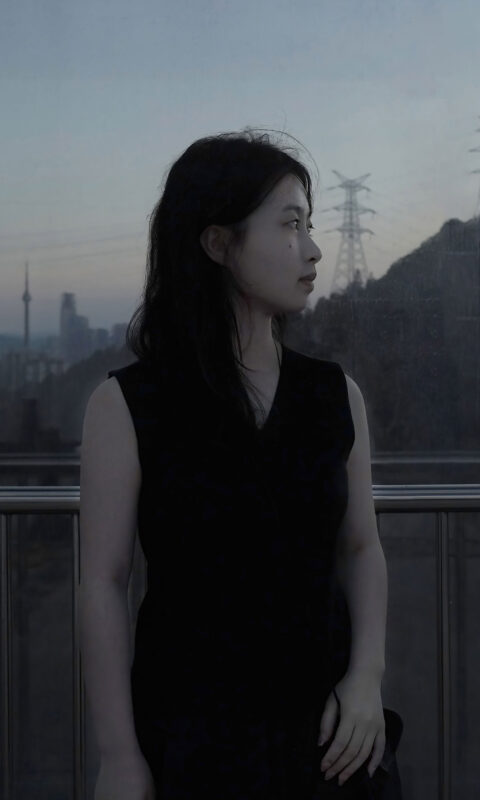
作者简介
AUTHOR’s biography
独立策展人,写作者,博古睿学者。清华大学本科学士,英国皇家艺术学院艺术批评硕士,伦敦大学金匠学院前沿实践方向博士在读。龙星如策划的主要展览包括 “撒谎的索菲亚和嘲讽的艾莉克莎”(北京现代汽车文化中心,2019)、“他山之石,新代理人”(上海当代艺术博物馆,2021)、第三届今日未来馆 “机器人间”(北京今日美术馆,2019)、首届北京艺术双年展科技板块 “大地热流:回到太阳时间的访客”(北京友谊商店,2023)等,她也为艺术家刘昕(“寰宇直下”,阿那亚艺术中心,2022)、Lauren Lee McCarthy(“你可以说:‘重置房间。’”,Brownie Project,2020)等策划国内首个个展,为《中国国家天文》策划首个科学艺术展览 “步天歌”(复星艺术中心,2023)。2021 年,她发起了 “端口:云下贵州” 项目,这是一个关于中国科技基础设施的长期调研项目(temporalstack.com)。
她的研究发表于 ZKM 媒体艺术中心 “艺术与人工智能” 会议,香港城市大学运算媒体艺术国际论坛(ISCMA),ISEA 电子艺术研讨会等。她还在 2019 年担任了 ISEA 电子艺术研讨会国际评委,也是 2020/22/23 年计算机图形学会议 SIGGRAPH ASIA 艺术板块国际评委。
Iris Long is a writer and independent curator. She received her BA from Tsinghua University, MA in Critical Writing in Art & Design from the Royal College of Art, and is studying at the Advanced Practices PhD Program at Goldsmiths, University of London. She is also a 2022–2023 Berggruen Fellow. She has curated exhibitions around art, science and technology, such as “Lying Sophia and Mocking Alexa” (Hyundai Blue Prize, Beijing, 2019), “Blue Cables in Venetian Watercourse” (Power Station of Art, Shanghai, 2021), the third Today Art Museum Biennial “Future of Today” (2019), the art&tech sector of the inaugural Beijing Art Biennial “Earth Heat Flow: the Visitor Who Returns to Solar Time” (2023). She has curated the first solo exhibitions in China for artists Xin Liu (“The Ground is Falling,” Aranya Art Center, 2022) and Lauren Lee McCarthy (“You Can Say: ‘Reset the Room.’” Brownie Project, 2020). She has also curated for the Chinese National Astronomy magazine its inaugural exhibition on art and science (Fosun Foundation, Shanghai, 2023). In 2021, she launched “Port: Under the Cloud” (temporalstack.com), a long-term research and curatorial project on the infrastructures of science and technology in China.
Iris’s research has been presented at “Art and Artificial Intelligence” (Open Conference, ZKM), “Art Machines: International Symposium on Computational Media Art”(City University of Hong Kong), and ISEA, among others. She served on art jury of ISEA (2019) and SIGGRAPH ASIA (2020/22/23).