游心太玄:
当代中国女性艺术家的田野工作与环境叙事
Wandering into the Depths of Nature:
Fieldwork and Environmental Narratives of Contemporary Chinese Women Artists
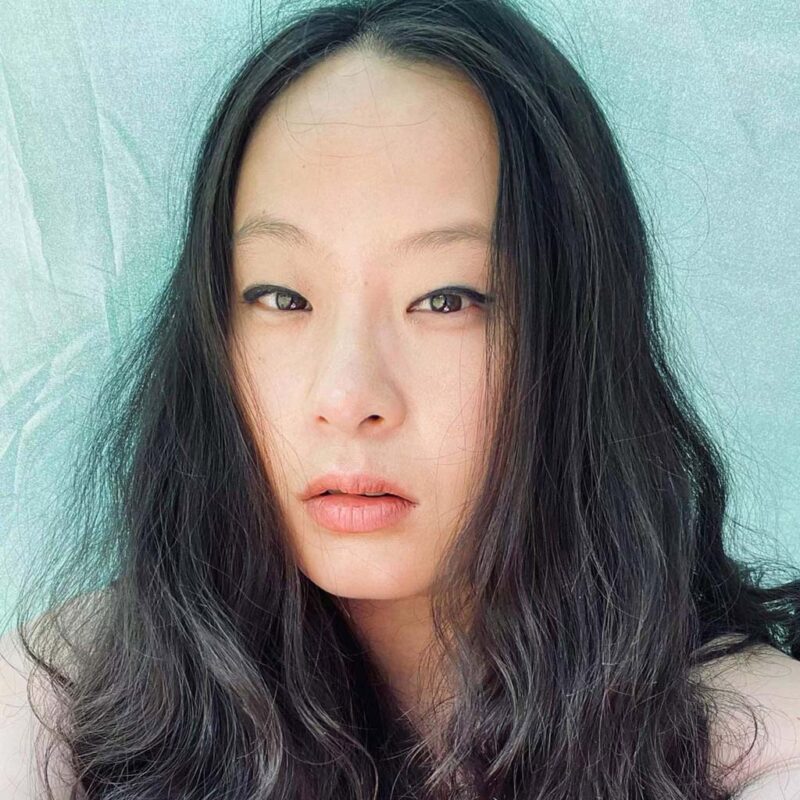
当代中国女性艺术家的田野实践正在重新定义我们理解环境与身体关系的方式。在全球环境危机日益深化、人类世地质时代的背景下,这些女性艺术家的田野实践既见证着华夏大地的生态变迁⸺从工业化进程对传统景观的改造到气候变化对地质结构的影响,也通过身体感知与影像语言探索着重新理解环境关系的可能性。
她们的艺术实践的独特性并非来自对科学方法的简单挪用,而是源于女性身体经验与感知方式中蕴含的生态智慧。回溯中国文明早期,西王母、女娲与精卫鸟等神话女性形象从天地阴阳之间汲取经验与视角,以直接的身体感知将自然混沌转化为独特智慧。她们所展现的生态智慧,为我们在当下重新审视女性自然观并应对全球环境危机提供了重要启发⸺女性的身体经验和感知方式,可能蕴含着被现代科学体系所忽略的重要知识,这种源于阴阳互补的古老智慧,能指引我们重塑人与环境的可持续关系。
从 张文心 在地下洞穴中探寻深度时间的拓扑图景,到 刘雨佳 在东北森林里全感官开放的不确定旅程;从 贺子珂 将贵州数据中心想象为崩溃后的地质记忆,到 陈萧伊 在拉萨岩画与澳洲山洞间拼接跨越千年的文明碎片;从 韩倩 深入河北矿山废墟进行的记忆考古,到 徐晓晓 沿长城足迹 25,000 公里的公路穿越⸺她们的工作超越了传统的艺术创作范畴,成为一种独特的生态认知实践。本文以本人策划的巡展 “相地堪舆” 为契机,特别关注以上六位女性艺术家创作中田野工作与生态感知的交汇部分。1
Footnotes
-
展览由广东时代美术馆委任,以 “堪舆学” 作为隐喻,分为四个相互交织的板块,展现二十二位艺术家(其中两位为展映艺术家)对华夏大地相关的历史、美学、文化、生态与地缘等复杂议题的回应,旨在探索当代艺术实践与本土地理知识、全球生态话语以及艺术家个体经验之间的联系。巡展于 2025 年 6 月 27 至 10 月 8 日期间于上海 Fotografiska 影像艺术中心展出,汇聚了如何以摄影和影像为媒介,重新构建与地理相关的视觉叙事。 ↩
Contemporary Chinese women artists’ field practices are redefining our understandings of the relationship between the environment and the body. As global ecological crises intensify and the Anthropocene comes into sharper focus, their field-based work bears witness to ongoing ecological transformations across China, from industrialization’s reshaping of traditional landscapes to climate change’s impact on geological structures. Through embodied experience and video works, they explore new possibilities for reimagining human relations with the environment.
They do not simply appropriate scientific methods in their practices, but draw on ecological wisdom grounded in women’s embodied experience and modes of perception. Mythical female figures from early Chinese civilization, such as Queen Mother of the West, Nüwa, and the bird Jingwei acquired experience and insights from the dynamic interplay between yin and yang, heaven and earth. Through direct bodily perception, they transformed natural chaos into distinctive understandings. This tradition of ecological intelligence offers important inspiration for rethinking women’s ecological worldviews and confronting global environmental challenges today. It suggests that women’s embodied experience and perception may contain vital forms of knowledge overlooked by modern scientific paradigms. Rooted in the complementary forces of yin and yang, this ancient wisdom points toward a renewed and more sustainable relationship between humanity and the environment.
Zhang Wenxin explored deep-time topologies in underground caves, while Liu Yujia opened all her senses to an unscripted journey through the forests of northeast China. He Zike imagined a data centre in Guizhou as a site of collapsed geological memory, and Chen Xiaoyi brought together fragmented civilizations across millennia from Lhasa’s rock carvings and Australian caves. While Han Qian entered the ruins of mines in Hebei to conduct archaeologies of memory, Xiaoxiao Xu travelled 25,000 kilometers along roads tracing the Great Wall. Their works move beyond the conventional boundaries of art-making to emerge as a distinctive practice of ecological cognition. Taking the traveling exhibition “Photographic Geomancy” I curated as a point of departure, this article examines the convergence of fieldwork and ecological perception in the work of these six women artists. 1
Footnotes
-
Commissioned by Guangdong Times Museum, the exhibition uses geomancy (fengshui) as a metaphor and is structured into four interwoven sections. It features responses by twenty-two artists (including two artists in screening) to complex issues related to China’s historical landscapes, aesthetics, culture, ecology, and geopolitical realities. The touring exhibition, presented at Fotografiska Shanghai from June 27 to October 8, 2025, explores how photography and moving images can reconstruct visual narratives related to geography. ↩
Building on my own fieldwork experience, this article situates the artists’ practices within three analytical frameworks: imagination and narrative, wholeness and fragmentation, and remoteness and closeness. It explores how their embodied experience and creative reflections in the field generate new knowledge, 1paying particular attention to the ways in which these women artists use artistic practice to rethink the human–nature relationship in the face of environmental change. In doing so, it offers new perspectives and inspirations for both theoretical inquiry and practical exploration in contemporary art and field-based research.
Footnotes
-
These three dimensions correspond respectively to the poetic transformation mechanisms in women artists’ environmental perception, methods of knowledge archaeology in deep time, and emotionally resonant geographical strategies of spatial reconstruction. ↩
想象与叙述
Imagination and Narrative
三峡大坝合龙前一年,我陪伴母亲从铜陵登船溯江而上,在长江流域即将发生生态巨变之前,完成与即将永沉江底的土地的漫长告别。浩荡江水中的记忆⸺葛洲坝岸边叫卖玉米的老人、船舷边闲谈的旅人、丰都码头上如今已没入水底的传说⸺不仅塑造了笔者体验世界的方式,也促使我将对世界的想象重新锚定于身体、土地与在地经验。当自己的工作与艺术家的实践交汇时,我观察到了一种想象–经验的转化机制:不是将想象与现实对立,而是让想象成为深入现实的路径,让身体感知成为重构叙述的基础。这种方法在刘雨佳和贺子珂的创作中尤为突出。
刘雨佳的田野实践,正是这种从想象到经验转化的生动诠释。她采用旅行拍摄的工作方式,坚持出发前不准备剧本、不做调研,而是 “将所有感官毫无保留地打开,拥抱充满不确定性的旅程”。1 在《微光渐暗》(2023)的影像探索中,刘雨佳深入东北边陲的神秘地带,跨越多个民族聚居区域。通过 16 毫米胶片、数码摄像和无人机等多样媒介,她捕捉了伐木、狩猎、采参和捕鱼等原始生存活动的细微瞬间。这种跨越技术和文化边界的影像实践,展现了一种超越传统纪录片叙事的独特方式,将民族志、文学想象与影像艺术融为一体。最终,她呈现了一幅人、灵、动植物共生的森林生态图景,见证了工业化进程中这片古老森林的生态变迁和人与自然关系的微妙转换。
Footnotes
-
于渺,《穿梭在北方边疆的光里》,当代唐人艺术中心。 ↩
In the year before the completion of the Three Gorges Dam, before the profound ecological transformations of the Yangtze River basin, I accompanied my mother on a journey upriver from Tongling, bidding a long farewell to the landscape soon to be submerged forever beneath the water. Old men selling corn along the banks near Gezhouba, fellow travelers chatting by the boat’s railing, and the legends of the now vanished Fengdu dock remain vivid in my memory. Carried by the river’s vast current, these scenes have shaped not only how I experience the world, but also compelled me to anchor my imagination of the world in the body, the land, and situated experience. When my own work intersects with the practices of these artists, I observe a transformative mechanism between imagination and experience. Imagination does not stand in opposition to reality; rather, it becomes a means of entering into it. Embodied perception also provides the basis for reconstructing narrative. This dynamic is particularly prominent in the works of Liu Yujia and He Zike.
Liu’s field practice compellingly demonstrates this transformation from imagination to experience. Filming while on the road, she sets out without a script or prior research, choosing instead to “open all senses unreservedly and embrace a journey full of uncertainty.” 1 In her 2023 film A Darkness Shimmering in the Light, she ventured deep into the remote northeastern borderlands of China, traversing regions inhabited by various ethnic groups. Working across multiple media, including 16mm film, digital video, and drone footage, she captures fleeting scenes of subsistence practices such as logging, hunting, ginseng gathering, and fishing. Transcending technological and cultural boundaries, her approach to filmmaking departs from traditional documentary narratives and brings together ethnography, literary imagination, and video art. In the end, she presents a forest ecology where humans, spirits, animals, and plants coexist. It manifests the ecological transformations of this ancient forest under industrialization, and the subtle shifts in human–nature relationships.
Footnotes
-
Yu Miao, “Traversing in the Light through the Northern Frontier”, Tang Contemporary Art. ↩
如果说刘雨佳的实践是通过身体的开放性重新想象自然空间,那么贺子珂在《乱码城市》(2023)中的探索则展现了从技术想象到地质叙述的混合叙事。基于艺术家与策展人龙星如共同发起的 “云下贵州” 项目,贺子珂的创作设想了一个城市数据中心崩溃后的混乱场景,将数字化危机转化为人类与地质记忆的交汇空间。1 艺术家通过敏锐的直觉,将数据中心的物理存在⸺服务器、指示灯、恒温机房⸺重新阐释为承载着集体记忆的地质层面。这种想象能力体现了艺术家在技术环境中的独特叙述策略:不是简单地批判或接受技术,而是通过身体化感知重新定义技术与自然的关系。正如她所言,“世界是一个巨大的数据中心”⸺这种认知重新定义了理解城市空间的方式,揭示了数字时代人类生存的深层结构。2
Footnotes
-
“云下贵州” 是一个围绕贵州科技基础设施展开的走访和研究项目,由龙星如和贺子珂联合发起,并由贵州师范大学当代视觉艺术研究中心及拆东西研究所(Assembly)联合支持。 ↩
-
芭莎艺术,《贺子珂:世界是一个巨大的数据中心》,2024 年 6 月 4 日。https://mp.weixin.qq.com/s/TybroU3EOwjthozFasDFNg ↩
While Liu reimagines natural space through bodily openness in her practice, He’s Random Access (2023) constructs a hybrid narrative that moves from technological fantasy to geological storytelling. Developed as part of Under the Cloud, a project she co-initiated with curator Iris Long, the work envisions a chaotic aftermath following the collapse of an urban data center, transforming a digital crisis into a site where human and geological memory intersect. 1 He acutely reinterprets the material infrastructure of the data center, such as servers, indicator lights, and temperature-controlled rooms, as geological strata embedded with collective memory. Such imaginative capacity reflects the artist’s distinctive narrative strategy in technological environments. Rather than simply critiquing or celebrating technology, she redefines the relationship between technology and nature through embodied perception. As she puts it, “The world is one vast data center.” This perspective reconfigures our understanding of urban space and reveals the underlying structures of human existence in the digital age. 2
Footnotes
-
Under the Cloud is a fieldwork and research initiative centered on Guizhou’s technological infrastructure, co-initiated by Iris Long and He Zike, and jointly supported by the Contemporary Visual Art Research Center at Guizhou Normal University and Assembly Research Institute. ↩
-
“He Zike: The World is a Massive Data Center,” Bazaar Art, June 4, 2024. https://mp.weixin.qq.com/s/TybroU3EOwjthozFasDFNg ↩
观察这两位艺术家的实践,我发现她们的田野工作从不满足于客观记录,而是通过想象力的介入,将那些碎片化的田野经验重新编织为具有情感温度的叙述。她们的身体既是认知工具,也是想象的源泉,总能捕捉到理性分析容易遗漏的微妙关联。在田野工作到艺术创作的转化中,想象与现实、个人与集体、过去与当下,都在身体的感知中重新组合,最终转化为那些既私人又公共的叙述。
The fieldwork of these two artists is never merely documentation. Instead, they imaginatively reweave fragmented field experiences into emotionally resonant narratives. Their bodies serve not only as cognitive instruments but also as sources of imagination, attuned to subtle connections often missed by rational analysis. In the transformation from fieldwork to artistic work, imagination and reality, the personal and the collective, the past and the present, are all recomposed through embodied perception, giving rise to storytelling that is at once intimate and public.
整体与碎片
Wholeness and Fragmentation
2025 年夏天,我重返长江及支流一带,栖居于武当山南神道的山间院落。酷暑中仰望星空,璀璨星宿间夹杂着快速穿梭的光点⸺它们时而汇聚,时而四散,在天际间神秘游走。眼前忽然闪过微光,是三伏时节零星闪烁的萤火虫,如地上的星火。那一刻,近处的萤光与远方的星辰交相辉映,将瞬间的闪光与广阔世界连接。这样的田野体验让我想到张文心、陈萧伊在各自实践中的探索⸺她们从不满足于对单一现象或孤立议题的表面观察,而是沿着一条线索深度挖掘,将散落的碎片编织成完整的问题世界。如同这夜空中点点星光,看似孤立,实则共同构成浩瀚宇宙的整体图景。
In the summer of 2025, I returned to the Yangtze River and its tributaries, residing in a mountain house along the South Divine Path of Wudang Mountains. Amid the sweltering heat, I gazed up at the starry sky, watching scattered points of light dart across the brilliant constellations. At times they converged, at times they dispersed, mysteriously traversing the night. A faint glimmer suddenly flickered before my eyes. They were fireflies shimmering in the dog days of summer, like stars fallen to the ground. The glow of the fireflies immediately in front of me and the distant starlight above mirrored each other, linking fleeting flashes with the vastness of the world. This field experience brought to mind the practices of Zhang Wenxin and Chen Xiaoyi. Neither settles for superficial observations of isolated phenomena or singular issues; both always pursue lines of inquiry in depth, putting scattered fragments into a coherent intellectual realm. Their works resemble the stars in the night sky. While each point appears separate, together they form the larger cosmos.
张文心的创作实践诠释了这种从碎片到整体的认知方式。她痴迷于一次又一次走向田野,在前往洞穴和荒野的过程中,与探险者与科学家同行,不断延展身体的感知力与思维在深度时间里的穿透力,以期描述 “人类及非人的心智”。1 在《洞穴与身体的拓扑图》(2014–)中,张文心将洞穴视为连接身体与地质历史的拓扑图景⸺从史前壁画到黑洞图像、从桃花源到末日地堡,这些看似零散的局部经验被她编织成整体叙事,揭示洞穴如何在地层之下塑造人类认知与历史。张文心的探索揭示了地下空间作为气候变化时代避难所的可能性,思考洞穴生态系统在环境危机中的庇护意义。她的田野工作不是被动记录,而是主动迷走于森林与洞穴,找寻那些被历史折叠的生命经验。正如她所言⸺“人自然无法变成石或木,我们的肉身柔软又脆弱,但当周遭世界一次次坍塌,人又会凭记忆走出死亡,与万物在时间的寒灰中穿行,潜入无数槁木般的身体,在窍穴中共同等待重生之风的到来。”2
Footnotes
-
参考由叶滢主持的 “未来志异” 播客节目⸺潜入洞穴,迷走森林:“走地艺术家” 与她的同伴和前辈们。 ↩
-
张文心,《地籁》,MUD Gallery, 2022 年 7 月 27 日,https://mp.weixin.qq.com/s/xlolD6DvSNgds135K3ZnYQ ↩
Zhang’s practice fully embraces the mode of cognition that moves from fragmentation to wholeness. She enters caves and wilderness, joins explorers and scientists, and obsessively returns to the field time and again. She continually expands the sensory capacities of her body and pushes her thinking into deep time, in an effort to articulate “human and nonhuman intelligence.” 1 In Topology of Caves and Bodies (2014–), Zhang treats the cave as a topological landscape that connects the body to geological history. From prehistoric murals to images of black holes, and from the Peach Blossom Spring to apocalyptic bunkers, these seemingly disparate experiences are woven into a holistic narrative that reveals how caves have shaped human cognition and history from below. Zhang’s exploration points to the potential of subterranean space as refuge in an age of climate crisis, prompting reflection on the cave ecosystem as shelter amid environmental catastrophe. Her field practice is not one of passive recording, but of active wandering through forests and caverns in search of lived experiences folded into history. As she states, “A human cannot turn into stone or wood. Our flesh is soft and fragile. But when the world around us collapses again and again, it is memory that leads us away from death. Through time’s cold ashes we walk with all beings, slipping into countless withered bodies, awaiting in the caves the return of the wind that brings rebirth.” 2
Footnotes
-
See the Archipelago of the Future podcast hosted by Ye Ying, episode “Into the Caves, Lost in the Forest: The ‘Wandering Artist’ and Her Companions and Predecessors.” (In Chinese) ↩
-
Zhang Wenxin, Sound of Earth, MUD Gallery, July 27, 2022. https://mp.weixin.qq.com/s/xlolD6DvSNgds135K3ZnYQ ↩
陈萧伊的田野实践体现了独特的时空整合能力,她能在碎片化的地理文化遭遇中捕捉跨越千年万里的深层联系。2023 年她因白海螺线索前往拉萨,在岩石上发现天梯图画,成为《古老的愿景》(2024)影像中重要的画面。这个发现激活了她对 2013 年在澳洲岛礁山洞中见过的八千年前恩加卢玛人梯子图案的记忆。两个相距万里、时隔千年的文明碎片在她的感知中形成惊人呼应。她的田野工作超越地理移动,在 “语言之下的语言,表象世界下的世界” 中寻找生命本质的共通性⸺全球气候变化对不同生态系统的影响,从青藏高原的冰川消融到澳洲珊瑚礁的白化,环境变迁成为连接古今文明的隐秘线索。1 在无数次往返田野考察的经历中,她体悟到创作的意义:“将自己的生命时间,赋形于遭遇之物,让其与我共享生命,一起重新在这世间复活”。2 这种融合个人生命经验与古老文明智慧的能力,使她的田野工作成为深度的时空考古,在碎片中重构完整的精神地图。
在张文心和陈萧伊的生命经验中,田野从不仅仅是物理空间的移动,更是情感与记忆的交汇之地。她们以身体为媒介,将个人体验与环境变迁交织,回应土地深沉的呼唤。正如萤光与星辰的交相辉映,艺术家们在田野中捕捉的每一个局部闪光,都如萤火虫般点亮整体星穹。她们的实践在碎片与整体的辩证中,在个人经验与宏大叙事的交融中,书写着对时代最为敏锐而深刻的回应。
Footnotes
Chen’s field practice demonstrates her remarkable ability to connect disparate times and spaces. She traces deep correspondences across geographically and culturally fragmented encounters. In 2023, guided by clues of white conches, she traveled to Lhasa, where she discovered ladder-like patterns etched into rock. This finding became a key image in her 2024 film The Visions of Karma. The discovery also reactivated her memory from 2013, when she had seen a similar ladder motif painted some 8,000 years ago by the Ngarluma people in a cave on an island off the coast of Australia. Separated by millennia and continents, these fragments of civilization enter into a striking resonance. Her fieldwork transcends geographic boundaries in search of common ground in the nature of life, examining “the language beneath language, and the world beneath appearances.” She explores how global climate change affects distant yet interconnected ecosystems, from melting glaciers on the Tibetan Plateau to coral bleaching on Australian reefs. Environmental transformation emerges as a hidden thread linking ancient and contemporary civilizations. 1 Based on her many field expeditions, she reflects on the purpose of artistic creation: “To give form to the time of my life through the objects I encounter, so they may share life with me and be reborn into the world.” 2 By integrating personal experience and the wisdom of ancient cultures, her fieldwork becomes a profound form of spatiotemporal archaeology, enabling her to reconstruct a spiritual map from small pieces.
In the lived experiences of Zhang and Chen, the field is never just a physical space. It is also a site where emotions and memories converge. Using their body as a medium, they weave personal experience together with environmental changes and respond to the field’s persistent call. Each fleeting glimmer captured by the artists in the field illuminates the universe like a firefly lighting up the night sky. Their practices offer some of the most acute and profound responses to our times, through the interplay of fragmentation and wholeness, and of individual experience and universal narrative.
Footnotes
远郊与近邻
Remoteness and Closeness
在武当山旅行结束后,我与几位艺术家开启了为期四天的舟山田野考察,调研当地殖民历史、近代基础设施建设以及当下生态环保议题。在舟山群岛的田野中,我们见证了海岛生态系统的脆弱与坚韧⸺从殖民历史的创伤到近代港口建设的环境影响,再到当下海洋垃圾和气候变化的双重挑战。正是在这样的田野体验中,我愈发意识到女性艺术家的环境敏感性并非偶然⸺她们的身体经验与感知方式,恰恰回应了环境危机中最被忽视的维度:情感的、诗性的、整体性的生态智慧。
After my stay in the Wudang Mountains, I joined several artists on a four-day field trip to Zhoushan, investigating the region’s colonial history, modern infrastructure development, and current environmental concerns. We encountered both the fragility and resilience of the island ecosystem, marked by wounds of colonial history, the environmental impact of port construction, and the combined challenges of marine pollution and climate change today. Through such field experiences, I have become increasingly aware that women artists’ environmental sensitivity is not incidental. Their bodily experiences and modes of perception directly address the most overlooked dimensions of the ecological crisis: the emotional, poetic, and holistic forms of ecological wisdom.
韩倩的《海潮间歇的寂静里》(2022)体现了基于记忆考古学的田野实践。她采取游牧式创作状态,多次深入河北矿山和厂房遗址,通过身体介入将地理 “远郊” 转化为承载记忆的情感 “近邻”。在她的镜头中,河北的矿山不仅是地质意义上的物质空间,更是承载着三代人家族史的记忆地层。韩倩以自身家庭为线索,梳理二十世纪中国钢铁工业由北至南的迁移轨迹,将个人命运与历史变迁的交汇点精确定位在这片看似荒凉的土地上。在影像中,后工业时代矿场废弃的遗址与生态共栖,见证着大地如何在历史创伤中重新萌发生机⸺在此,线性的历史进程在艺术家身体感知中被重新编织为循环往复的生态节律。更为重要的是,艺术家拒绝将田野简化为数据收集场所,而是让身体成为连接过去与现在、个人与集体的敏感媒介,正如她所说,当我们试图了解那些 “不自洽的东西” 时," 历史与记忆往往引向更久远、更复杂的世界。”1
Footnotes
-
王莲仪,《访谈|韩倩的故土、记忆与乡愁》,波眼艺术,2022 年 11 月 14 日。https://mp.weixin.qq.com/s/zd0lnWp2WQQoK3h4b-DEtg ↩
Han Qian’s Stillness Between Two Waves of the Sea (2022) exemplifies a field-based practice rooted in the archaeologies of memory. Her nomadic working method led her to make repeated visits to the mines and industrial ruins of Hebei Province. Her embodied engagement transformed geographical remoteness into an emotionally intimate landscape of memory. Seen through her lens, Hebei’s mines are not only geological sites, but layered terrains of memory that carry the histories of three generations of her family. By tracing her family lineage, Han maps the trajectory of China’s steel industry as it migrated from north to south in the twentieth century, precisely locating the intersection of personal fate and historical transformation on this seemingly desolate land. In her video, the post-industrial ruins of abandoned mining sites cohabitate with natural life, witnessing the earth’s regeneration amid historical trauma. Through embodied perception, she reconfigures the linear progression of history into a cyclical ecological rhythm. Crucially, she refuses to reduce the field to a site of data collection. She opens her body as a sensing medium that connects past and present, as well as the personal and the collective. As she remarks, when we attempt to understand things that are “incoherent,” “history and memory often lead us toward older, more complex worlds.” 1
Footnotes
-
Wang Lianyi, “Interview: Han Qian on Homeland, Memory, and Nostalgia,” Boyan Art, November 14, 2022. https://mp.weixin.qq.com/s/zd0lnWp2WQQoK3h4b-DEtg ↩
徐晓晓在《饮马长城窟行》项目中的实践,进一步丰富了我们对 “远郊与近邻” 关系的理解。她追随着长城脚下人们的生活,进行了长达 25,000 公里的公路旅行,将这一看似遥远的历史遗址转化为切身的田野经验。与许多人想象的不同,长城并不是一座连续的建筑,而是由多个朝代修建的墙体和塔楼的集合。徐晓晓的旅行不止于对遗址的考察,她的旅程见证了长城沿线生态系统的多样性变化,从荒漠化的威胁到植被恢复的努力,环境保护与文化遗产保护在这里形成复杂的交织。徐晓晓将宏大的历史叙事拉回到具体的人文地理经验中,展现了女性艺术家如何通过长距离的田野穿越,重新激活那些被现代化进程遗忘的空间记忆。
韩倩与徐晓晓的实践向我们展现出 “远郊” 从来不是单纯的地理概念,它更多地指向那些被主流叙事遗忘或边缘化的经验空间。而 “近邻” 也并非仅仅是物理距离的亲近,它代表着通过身体感知和情感投入而建立的深度连接。在她们的田野工作中,远与近、古与今、个人与历史在女性独特的感知方式中重新组合,形成既具有批判性又充满诗意的空间叙述。
在全球环境危机日益严峻的今天,上述艺术家所体现的情感的、诗性的、整体性的生态智慧,或许正是我们迫切需要的认知资源。正如那些古老的女性神话形象所昭示的,女性的身体经验和感知方式中蕴含着被现代科学体系所忽略的重要知识⸺这种知识能够指引我们重塑人与环境的可持续关系,在环境变迁的时代构建新的生存诗学。(翻译:赵文睿)
Xiaoxiao Xu’s Watering My Horse by a Spring at the Foot of the Long Wall further enriches our understanding of the relationship between the remote and the nearby. Following the lives of people living at the foot of the Great Wall, she undertook a 25,000-kilometer road trip, making what is often perceived as a distant historical monument into a personal field experience. Contrary to popular imagination, the Great Wall is not a single, continuous structure, but a collection of walls and watchtowers built across various dynasties. Over the course of her journey, Xu did more than investigating historical sites; she also observed diverse ecological transformations along the Wall. Whether concerning the threats of desertification or efforts at vegetation restoration, environmental and cultural heritage protection intersect in complex ways. By grounding this grand historical narrative in lived, geographical experiences, Xu demonstrates how women artists, by means of long-distance field crossings, can reactivate spatial memories obscured by modernization.
The practices of Han and Xu show that remoteness has never been a mere geographical concept. It often refers to experiential spaces that have been forgotten or marginalized by dominant narratives. Likewise, closeness is not defined solely by physical proximity, but by the depth of connection forged through bodily perception and emotional engagement. In their fieldwork, the distant and the nearby, the ancient and the contemporary, and the personal and the historical are reconfigured through women’s distinctive perceptual frameworks. They formulate spatial narratives that are at once critically engaged and poetically charged.
With an escalating global environmental crisis, the emotional, poetic, and holistic ecological wisdom demonstrated by the aforementioned artists may well be the cognitive resource we urgently need. As ancient female mythological figures suggest, women’s embodied experiences and perceptual modes carry crucial knowledge that has been overlooked by modern scientific systems. Such knowledge offers guidance for reimagining sustainable relationships between humans and the environment and for articulating a new poetics of survival in an era of ecological transformation. (Translated by Wenrui Zhao)
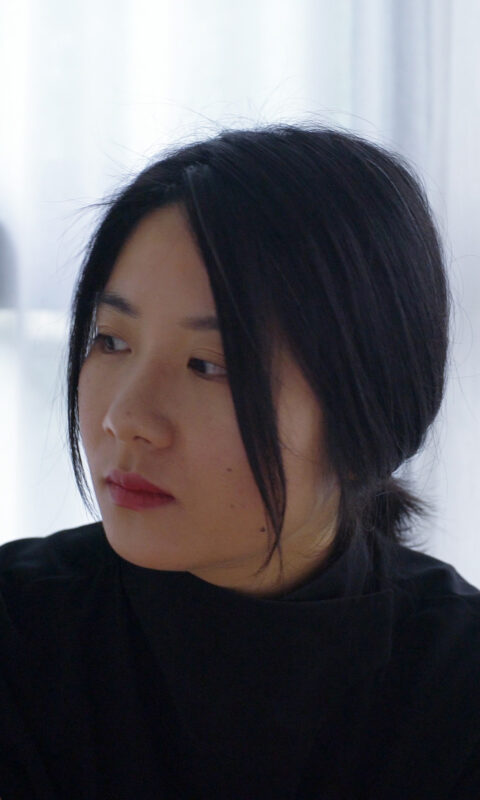
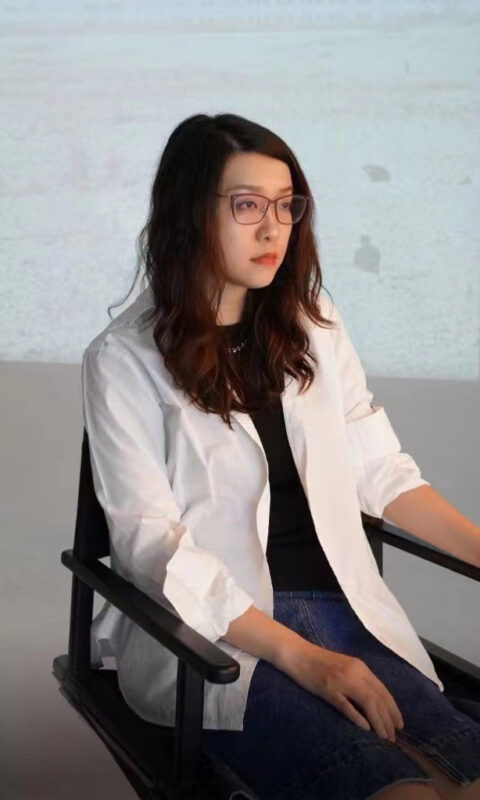
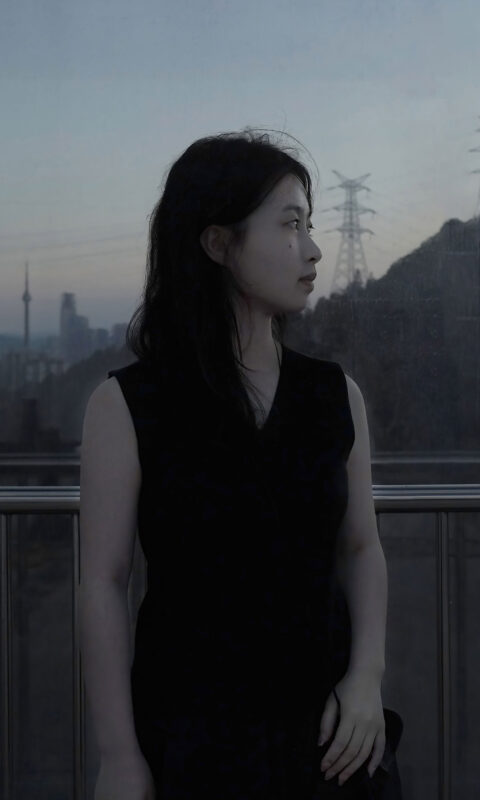
相关艺术家
Related Artists
作者简介
AUTHOR’s biography
何伊宁,活跃在视觉艺术领域的研究者、策展人。她擅长挖掘当下全球具有挑战性的视觉艺术实践,并将其编织在政治与文化的双重视野下。何伊宁毕业于英国伦敦艺术大学伦敦传媒学院,她正在英国伯明翰城市大学艺术、设计与传媒学院中国视觉艺术中心(CCVA)研读博士,其研究围绕 2010 年前后中国当代艺术实践中的去殖民性(decoloniality)所展开,考察艺术家个人经验、解殖话语与全球地缘政治互动之间的联系。
她曾在中国和欧洲策划过大型群展,包括 “在群山、丘陵与湖泊之间”(设计互联/Modern Art Base/三影堂摄影艺术中心 / 高台当代艺术中心,2020-21)、“记忆寓所”(OCAT 研究中心,2019)和 “港口与影像”(中国港口博物馆,2017/2019/2022)等。何伊宁是第八届新加坡国际摄影节,第三届北京国际摄影双年展的联合策展人之一;她是 OCAT 研究中心 " 首届 2018 研究型展览策展计划” 的优胜者,并凭借该研究项目的终展 “记忆寓所” 获得第十四届 AAC 艺术中国年度策展人提名奖。她的专著、编著以及参与撰写的合集包括《记忆寓所》《世界女性摄影史》《劳特利奇摄影与视觉研究导论》《英国摄影教室》及《港口与影像》系列等。
Working as a researcher and curator in the realm of visual arts. She has experience in locating controversial visual art practices around the world and integrating them into the conflicting viewpoints of politics and culture. He Yining graduated from the London College of Communication, University of the Arts London, and is pursuing her Ph.D. at the Centre for Chinese Visual Arts (CCVA) at Birmingham City University's School of Art, Design, and Media. Her research focuses on decoloniality in contemporary Chinese art practices around 2010, examining the connections between artists' personal experiences, decolonial discourse, and global geopolitical interactions.
She has curated large group exhibitions in China and Europe, including "Between Mountains, Hills, and Lakes" (Design Society/Modern Art Base/Three Shadows Photography Art Centre/Gaotai Contemporary Art Center, 2020-21), "The Abode of Anamnesis" (OCAT Research Center, 2019), and "Ports and Images" (China Port Museum, 2017/2019/2022). He Yining was one of the co-curators for the 8th Singapore International Photography Festival and the 3rd Beijing International Photography Biennial. She was the winner of the inaugural 2018 Research-based Exhibition Curatorial Project by the OCAT Research Center, and with the resulting exhibition "The Abode of Anamnesis," she was nominated for the 14th AAC Art China Curator of the Year Award. Her authored, edited, and co-authored publications include The Abode of Anamnesis, A History of Women Photographers, The Routledge Companion to Photography and Visual Culture, The British Photography Classroom, and the "Ports and Images" series.