边界搅动:
华人女性艺术家的影像实验
Fractured Boundaries:
Female Pioneers of Video Art from Asia and Beyond
纽约现代艺术博物馆(MoMA)视频艺术部门的创始人芭芭拉・伦敦(Barbara London)在她的《视频 / 艺术:第一个五十年》(Video/Art: The First Fifty Years)一书中回忆道:“时机成熟了。我们在‘现在’蓬勃发展…… 而且似乎人类可以用技术做任何事情。”20 世纪 60 年代,随着 1/2 英寸黑白 Portapak 和小格式视频的流行,影像成为颠覆电视主导文化话语权的重要领域。与此同时,反主流文化拒绝社会规训,追求个人情感、言论和精神自由,经常使用致幻剂来改变观念,激发创造力。同样的,“太空时代媒体” 的影响和转变,为探索新技术在塑造未来方面赋予了巨大潜力和可能性。
影像艺术在萌芽发展时期恰逢女性运动、性别、种族等政治问题的漩涡。尽管白南准(Nam June Paik)、布鲁斯・瑙曼(Bruce Nauman)等男性艺术家经常被誉为早期影像媒介实验的先驱,此时期女性艺术家的开创性工作亦构成了同期艺术史的重要部分。在媒介实验层面,乌尔丽克・罗森巴赫(Ulrike Rosenbach)制作闭路作品,同时拍摄和投影图像。玛丽娜・阿布拉莫维奇(Marina Abramović)和勒达・帕帕康斯坦丁努(Leda Papaconstantinou)捕捉了她们在 20 世纪 60 年代后期的行为表演,从而也挑战行为作品的瞬时性。
与照相机一样,摄像机成为展示和揭露压迫的有力工具。玛蒂娜・巴拉特(Martine Barrat)就曾导演了一系列关于在纽约南布朗克斯帮派成员生活的录像。女性艺术家利用影像破坏了电影的审美语境和男性主导的历史传统。玛丽亚・克洛娜丽斯(Maria Klonaris)和卡特琳娜・托马塔基(Katerina Thomadaki)开创了 “身体电影”(cinéma corporel),将女性身体和身份作为探索视觉和政治的场所,随后又成为试图颠覆父权制的有力工具。影像的媒介特性使其具有自发维度,创造一种引人注目的、甚至是强制性的关系。瓦莉・艾丝波尔(Valie Export)在 1971 年的作品《面对家庭》(Facing a Family)中将影像渗透到电视世界,质疑观看与被观看之间的关系。
Barbara London, who founded the video-media exhibition and collection programs at The Museum of Modern Art (MoMA), recalls in her book Video/Art: The First Fifty Years, “The time was right. We thrived in the ‘now’… With the aid of technology, humans seemed capable of anything.” In the 1960s, with the popularity of the half-inch black-and-white Portapak and small video format, video replaced television, becoming a crucial area that dominated cultural discourse. Meanwhile, counterculture movements rejected societal norms, sought freedom of personal emotion, expression, and spirituality, and often used psychedelics to alter perceptions and stimulate creativity. The impact and transformation rendered by media of the “Space Age” bestowed enormous potential and possibilities for exploring new technologies to shape the future.
The nascent stage of video art coincided with the political whirlpool of the women’s movement, and discussions of gender and race issues. While male artists like Nam June Paik and Bruce Nauman are often hailed as pioneers of video art, the groundbreaking experiments of female artists during this period also constitute an integral part of video art’s history. Ulrike Rosenbach created closed-circuit pieces, filming and projecting images at the same time. Marina Abramović and Leda Papaconstantinou captured their performance in the late 1960s, challenging the ephemerality of performance art.
Like the camera, the video camera served as a powerful tool for scrutinizing and exposing oppression. Martine Barrat directed a series of videos depicting the lives of gang members in the South Bronx in New York City. Female artists also employed video to disrupt the aesthetics of film and its male-dominated tradition. Maria Klonaris and Katerina Thomadaki pioneered “cinéma corporel”, which used the female body and identity as a site for investigating the visual and political, potently subverting patriarchal structures. Video as a medium possesses a distinctive sense of spontaneity, capable of captivating the attention of the audience, with them often drawn in involuntarily. In her 1971 work Facing a Family, Valie Export infiltrated the world of television with videos, questioning the relationship between the viewer and the viewed.
在媒介、政治和女性主义的交汇处,女性艺术家对影像语言与新技术的应用以及政治潜力的拓展提供了开创性遗产,也为影像艺术的发展奠定了基础。来自全球不同区域的现实张力、特定群体里的身份复杂性都进一步拓宽了影像的实验场域。本文将着重探讨来自不同代际华人女性艺术家的当代影像实践,例如 鲍蔼伦、郑淑丽、徐世琪的酷儿政治影像实践、身体感知潜能和影像表演的维度测试,曹斐 对边缘社区的关注和多托邦建设,阚萱、郝敬班、刘诗园 对于个人与文明现状之间流动关系的观察追问,姚清妹 以影像镜头作为公共介入的操演工具。她 / 他们的工作延续了 20 世纪 60 年代以来影像发展和确立的替代性表达以及驾驭复杂世界的传统,同时将更为广泛的议题纳入到影像媒介的实验中,通过深入研究性别、技术、历史、遗产等议题,全面性地质疑当下主导的权力体系及其盘根错节的形态。
个人与政治、公共与私人的议题一直以来在当代影像艺术实验中被普遍探讨,崇高与日常生活之间的鸿沟得以弥合,将此刻与不同时空的切面联系起来。自学成才的中国香港艺术家鲍蔼伦参与塑造了本地录像艺术的发展。她于 1986 年与朋友共同创立 “录映太奇”(Videotage),组织放映,并逐渐将视频媒体与技术联系起来。2001 年,她参加威尼斯双年展的作品《循环影院》(Recycling Cinema)结合影像技术与电子噪音,记录 24 小时内香港高速公路上的车辆,通过影像静态的镜头捕捉瞬息万变的城市,提供了一种超越单纯时空关系的体验。
不可忽视的是鲍蔼伦的影像创作中对 LGBTQ 题材的持续关注。近期,香港大馆当代美术馆的展览 “神话制造者 —— 光合・作用 III”(Myth Makers—Spectrosynthesis III)便以鲍蔼伦的作品作为展览的开篇和结尾。其中,《似是故人来》(1992)纪念一段近代酷儿爱情史。虚拟影像编织了 20 世纪中叶粤剧明星任剑辉和白雪仙的表演场景,她们在舞台和银幕中对恋人的刻画(任剑辉饰演男性角色)在现实生活中得以延伸,二人的终生陪伴也成为一段佳话。展览收尾的新作品《52Hz》(2022)同样源自对两位女性的致敬 —— 两名香港女学生。她们在恋爱关系被发现后自杀身亡。艺术家持续三十年的创作主题提示 LGBTQ + 社区在亚洲的历史,以及展览应有的包容性。
“神话制造者 —— 光合・作用 III” 展览中的另一件作品,来自华裔美国艺术家郑淑丽的《3×3×6》,最早在 2019 年威尼斯双年展展出。该作品收录了十部虚构的科幻朋克影像,讲述了历史中的非二元性别观念、性别 / 种族紊乱导致的监禁和惩罚案例,其中历史人物福柯、卡萨诺瓦和萨德侯爵的故事都以酷儿的方式演绎出来。《3×3×6》混合了图形、计算机编程以及现实和虚拟世界,其显示的视觉效果由混合各种图像源的算法控制 —— 包括展览参观者(经同意)的图像源 —— 以创建具有跨性别和跨种族主题的反监视抽象数字图像。参观者被邀请想象一个没有物理监狱与精神桎梏的世界,并重新定义我们与监视之间的交互关系。
自由、制裁、限制和解放是郑淑丽在过去三十年边界突破实践一直探索的主题。自 1982 年起,她一直是另类媒体团体 “纸老虎电视台”(Paper Tiger Television)的成员。由她创作的故事片《新鲜杀戮》(Fresh Kill,1994)涉及同性权利、环保主义和政治干预等超现实主义的家庭叙事,对黑客亚文化产生了重要影响,“黑客行动主义” 一词在这部电影中被首次使用。此外,她还与友人共同创立 “派乐西王国”(Kingdom of Piracy,2001),为数字内容和概念艺术的分享提供在线平台。在这些极具颠覆性力量的作品,以及艺术家对社区持续进行的关照中,网络女性主义、酷儿身份和社会正义等议题获得了拓展性讨论。
在年轻一代香港艺术家徐世琪的创作中,技术感知、医药科学、身体政治等议题得到关注,她的影像作品将传统模拟视频素材赋予了栩栩如生的记忆力量。近作《Lacrima》(2022)同样探寻影像叙事的超越性可能,魔术师和电影制片人乔治・梅里爱(Marie-Georges-Jean Méliès)、音乐指挥家汉斯・里希特(Hans Richter)、路易斯・布纽埃尔(Luis Buñuel)、电影导演和编舞家巴斯比・伯克利(Busby Berkeley)等人的影像素材与艺术家扮演的 20 世纪早期通灵者尼娜・帕拉迪诺(Nina Palladino)的叙事嫁接剪辑在一起;在无头鬼图像、迷雾气体、幽灵代码的超现实梦境中,艺术家创造了一个信仰飞跃的第四维空间。徐世琪的影像散文和伪纪录片将数字和虚拟影像素材、科学与炼金术、图像与魔法等领域的相似性交织在一起,通过东西方近代史中的技术革新岔路、歇斯底里的案例和孤注一掷的人物,创造出全新的叙事想象。
在中国内地的语境下,“悬浮” 指涉了一种普遍存在的生存状态和流动身份,是个人命运与中国当代社会极速进程和历史遗产之间的持续张力。自 2000 年以来的两个十年中,曹斐丰富繁杂的影像实验与急速发展的当代中国社会平行,通过纪录片的语言与超幻的建构弥合现实的碎片。无论是早期的集体式创作《三元里》(2003)中现代城市建筑与包裹其中的城中村,《人民城寨》(2007)中充满矛盾、融合、嘲讽、质疑,以及极端娱乐的中国现代新城,或是《La Town》(2014)中被角色模型和塑料建筑填充的末日大都市,不仅显现了个体面对中国急速变革的社会不断做出的调整和努力,也赋予了无名者表达的权力。就像在西门子委任项目《谁的乌托邦》(2006)平淡无奇的工厂里,工人扮演着梦想中的角色,舞蹈和演奏。
2021 年,在北京 UCCA 尤伦斯当代艺术中心举办的回顾展 “曹斐:时代舞台” 中,艺术家展示了她长期的跨学科项目 “红霞”。项目的主角是一座几乎被遗忘的社会主义初期文化遗产 —— 红霞影剧院 —— 其前身是职工食堂,20 世纪 60 年代初改为影剧院,后来成为曹斐的工作室,并以多层次媒介装置在展览中被还原。除了收集大量照片、文献档案、历史物件和新闻资料,曹斐亦在此拍摄了一部科幻电影《新星》(2019),影片虚构了一位科学家的失败研究以及所在不同时空承担的同一命运。电影建构了一个融合前苏联科幻美学、社会主义空间、网络世界等多重且相互渗透的影像空间,也为中国早期电子工业核心基地及其所在 —— 北京酒仙桥社区的历史变迁存档。
复杂的历史叙事在郝敬班的影像创作中以一种表演人类学的视角被重写和重演。她长期创作研究和考察的主题包括中国电影史、伪满洲国电影史和中国国标舞历史。透过舞蹈的身体、电影人物以及文化网络,历史和文化不断循环、自我修正的作用方式也逐渐显现出来。在近期的《作品一号》(2020)中,艺术家追踪了一对舞伴对于非裔美国人摇摆舞历史的思考和对传奇人物的风格演绎。二人在 2019 年前往该舞种的发源地纽约哈莱姆区,恰逢摇摆女王诺玛・米勒(Norma Miller)的葬礼。在这个塑造了舞蹈发展和现代文化史的空间中,他们感受到的是曾经璀璨的衰退、交流的困境与不同个体间的温情。或者说,无关种族背景,回到历史现场已然不可能。然而,对于个体来说,文化、社区、遗产的影响更多是细微的、不可明状的和非直线的。在郝敬班的影像空间中,历史变得柔韧,供来自未来的个体汲水。
对于阚萱来说,“历史不仅仅关于过去和学术,也是情感的延伸”,她的创作经常从个体经验出发,挖掘隐匿于客观存在和主观情感之的缠绕关系。曾入选 2013 年威尼斯双年展的《大谷子堆》(2012)是阚萱实践的一个转折点,其中 173 组静帧录像短片记录了艺术家与友人在长达 2 万 8 千公里的旅行中对 171 座已被发掘的中国皇陵遗址、以及周遭风景的记录。在这些由四五百张静止手机图像构成的定格动画影像中,每一处曾经代表帝国历史的地点及其构建的宏大叙事逐渐消解变形。在阚萱充盈着丰富细腻情感的剪辑中,这些已经嵌入沙石土地、成为风景的废墟图像如同自然物质与人类社会之间能量交叠的痕迹。
刘诗园基于图像的丰富媒介创作呈现出个体对不同历史文明和现状关系的滑稽误读。多文化生活背景使得艺术家深度关切全球化语境中的伦理问题和不断变化的技术对私人空间的侵袭。《迷失出口》(2013)利用了 “电影就是套用电影” 的方式探讨电影在不断发展的过程中,生产出诸多技术手段和框架,并最终规定了人们对现实的观看和想象。其中《花样年华》、《海滩》、《迷失东京》等旧脚本的片段被稍加改编后重新拍摄,在新秩序排列中构成语序整体通顺却略有跳脱的叙事。这部关于有关电影的替代性纪录片在质疑电影的话语建构的同时,也暗示了影像在各类屏幕中对当代生活的侵蚀。
影像一直以来是行为表演艺术家记录身体努力与仪式性行为的重要工具,例如,童文敏 的最新系列行为影像《从南到北》(2022 至今),记录了艺术家对野生影响的朴素的关注和绘制过程。然而,镜头的参与性也成为介入和检验公共领域的重要工具。姚清妹经历两年时间完成的 “地洞” 系列(2021)延续了她的 “社区日常表演” 主题,选择接近于纪录影像的方式,分别呈现了中控室里的值班活动,在重复口令下操演的一队保安,以及海滩上以相似姿势出现、活动和经过的游客。设置规则和安排角色在如同地下中控室里辐射四面八方的屏幕中,逐渐成为持续影像信息流,表演与现实时间的边界也分辨不清。
纽约现代艺术博物馆(MoMA)的朗蒂・埃伯斯媒体和表演策展人斯图加特・科默(Stuart Comer)在近期展览 “信号:视频如何改变世界”(Signals: How Video Transformed the World)中表示:“尽管影像已经在当代生活中普遍且具有决定性意义,但它始终是一种具有挑战性和难以捉摸的艺术形式,自诞生以来就对制度提出了挑战。” 影像艺术一直以来对参与式民主、身份政治、技术认知具有的独特影响,现实与虚拟世界在艺术家创作的熔炉中,同样揭示了始终具有全球性、批判性和激进性的媒介发展与当下历史之间的相互塑造。相较于 20 世纪 60 年代艺术家将自证性的影像作为反叛、抗议、讽刺和自我表达的手段融入其作品,今天影像已经从根本上成为了搅动世界的变革性媒体网络,作为证词、表演、抗议、寓言和民族志亲历线上与线下的冲突地区现场,见证历史波澜和社会运动。同时,在即时性、流通性和自我表达等问题的复杂纠缠中,成为抵抗不断渗透的控制系统的前沿。(翻译:赵文睿)
At the intersection of media, politics, and feminism, the legacy that female artists have left in the application of visual language and new technologies and the expansion of video’s political potential is unprecedented, thereby laying a solid foundation for the development of video art. The experimental field of video art is further broadened by artists who delve into realities from diverse global regions and explore complexities of identity within specific communities. This article focuses on the contemporary video practices of Chinese female artists across multiple generations. Ellen Pau, Shu Lea Cheang, and Angela Su engage in queer political video practices, testing the potential of bodily perception, and pushing the boundaries of video performance. Cao Fei directs our attention toward marginalized communities and constructs utopias in the process. Kan Xuan, Hao Jingban, and Liu Shiyuan observe and question the fluid relationships between the individual and the contemporary state of civilization. Yao Qingmei employs the lens as an instrument for public intervention. Their work continues video art’s commitment to alternative expression and navigating a complex world, since its emergence in the 1960s, while also incorporating a wider range of issues for experimentation. Through in-depth examinations of topics encompassing gender, technology, history, and heritage, they challenge the prevailing power structures and their nuanced complexities from every angle.
Contemporary experimental video art extensively explores the interplay between the personal and political, the public and private. It bridges the high culture and mundane life, forging connections between the present moment and disparate times and spaces. Ellen Pau, a self-taught artist from Hong Kong, has played a significant role in shaping the trajectory of video art in the region. In 1986, she co-founded Videotage alongside her peers, curating screenings and building associations between video and technology. Her work Recycling Cinema, presented at the 2001 Venice Biennale, integrates video technology with electronic noise. It documents the flow of vehicles along the highways of Hong Kong over 24 hours. Through static frames, it captured the ever-changing cityscape, creating an immersive experience that transcends the conventional temporal and spatial relations.
Pau’s continuous focus on LGBTQ issues in her videos is noteworthy. In the recent exhibition “Myth Makers—Spectrosynthesis III” at Tai Kwun Contemporary in Hong Kong, Pau’s work took center stage as both the opening and closing pieces. Notably, Song of the Goddess (1992) stands as a poignant tribute to a modern history of queer love. Virtual imagery weaves together scenes of mid-20th century Cantonese opera stars Yam Kim-fai and Pak Suet-sin. Their love stories on stage and on screen (with Yam Kim-fai in a male role) extended into their real lives, culminating in a heartwarming tale of lifelong companionship. Her new work 52Hz (2022) that concludes the exhibition likewise pays homage to two women. They were two Hong Kong students who tragically took their lives after their romantic relationship was discovered. The artist’s three-decade-long dedication to the LGBTQ+ community sheds light on its history in Asia and underscores the importance of inclusivity within exhibitions.
3×3×6, another work featured in the exhibition “Myth Makers—Spectrosynthesis III” was created by the Chinese-American artist Shu Lea Cheang. It was first exhibited at the Venice Biennale in 2019. Cheang interlaces scenes from ten fictional sci-fi punk works, recounting instances from history where non-binary gender concepts and gender-racial disorders led to imprisonment and punishment. The stories of Foucault, Casanova, and the Marquis de Sade are all interpreted through a queer lens. 3×3×6 melds graphics, computer programming, and the analog and virtual realms. The visual effects are generated by algorithms that blend various image sources, including photos of exhibition visitors (with their consent), to craft abstract anti-surveillance digital visuals that address gender and racial inclusivity. The audience are invited to envision a world devoid of physical incarceration and mental constraints, and to redefine our relationship with surveillance.
Freedom, sanctions, restrictions, and liberation have been the enduring themes Cheang has explored in her boundary-pushing practice over the past thirty years. Since 1982, she has been a member of the alternative media collective, Paper Tiger Television. Her film Fresh Kill (1994) is a family story that intertwines surrealistic narrative, grappling with issues such as LGBTQ+ rights, environmentalism, and political intervention. This film introduced the term “hacktivist” for the first time, and had a significant impact on the hacker subculture. She co-founded the Kingdom of Piracy in 2001 with friends to provide an online platform for sharing digital content and conceptual art. Cheang expanded the discussions on cyberfeminism, queer identity, and social justice, through her profoundly disruptive works and unwavering care for the communities.
The young Hong Kong artist Angela Su delves into a variety of subjects such as technological perception, medical science, and body politics. Her works infuse traditional analog video materials with vibrant recollections. Her recent piece Lacrima (2022) similarly explores the transcendent potential of visual storytelling. She creates a montage of footage featuring figures such as magician and filmmaker Marie-Georges-Jean Méliès, conductors Hans Richter, filmmaker Luis Buñuel, filmmaker and choreographer Busby Berkeley, and herself embodying the early 20th-century psychic Nina Palladino. Amidst the surreal dream of headless ghosts, misty gases, and ghostly codes, the artist invites the viewers to take a leap of faith into the fourth dimension she constructs. Su’s visual prose and pseudo-documentaries interweave digital and virtual footage, science and alchemy, image and magic. She crafts a thrillingly fresh narrative vision by examining the divergent paths of modern technological development between the East and West, recounting tales of frenzy, and casting spotlights on uncompromising individuals in history.
In the context of mainland China, the term “suspension” encapsulates a prevalent state of existence and the fluidity of identity. It represents the constant tension between individual destinies, the rapid evolution of contemporary Chinese society, and the enduring legacy of China’s history. Over the past two decades since 2000, Cao Fei’s rich and intricate visual imagery has captured the swift development of contemporary China. Juxtaposing the language of documentary and hyper-realism, she assembles fragments of reality. The early collaborative piece San Yuan Li (2003), draws attention to the modern urban architecture and the village-amidst-the-city. RMB City (2007) vividly depicts contemporary Chinese new towns, rife with contradictions, integrations, satire, doubt, and extreme forms of entertainment. In La Town (2014), mini-figures and plastic constructions inhabit a dystopian cityscape. Cao not only showcases the adjustments and efforts undertaken by individuals amidst China’s rapid societal transformations, but also bestows the rights of expression upon the nameless. Whose Utopia (2006), commissioned by the Siemens Arts Program, is a quintennial representation of her practice, wherein we see workers in an ordinary factory dance and perform the roles of their dreams.
At her retrospective exhibition “Cao Fei: Staging the Era” at UCCA Center for Contemporary Art in Beijing in 2021, Cao showed her long-term interdisciplinary project Hongxia. Its focal point is the Hongxia Cinema, a nearly forgotten cultural relic from the socialist era. Originally a workers’ canteen, it was converted into the Hongxia Cinema in the early 1960s, and later used by Cao as her studio. It was recreated in the exhibition through multi-layered media installations. Cao has collected a wealth of photographs, archival documents, historical objects, and news clippings pertaining to this space. She also shot a science fiction film Nova (2019) here. The film narrates the tale of a scientist's failed research and the same fate it bears across different times and spaces. The movie constructs a visual realm where Soviet science fiction aesthetics, socialist environments, and the online world converge, penetrating and influencing one another. It also serves as an archive chronicling the historical changes of the Jiuxianqiao neighborhood in Beijing, the central base for China’s early electronic industry.
Hao Jingban, through her videos, rewrote and reenacted intricate historical narratives in the style of performative anthropology. Her long-term research investigates themes such as China’s film history, Manchukuo’s film history, and the history of ballroom dance in China. Via the interplay of the dancing bodies, film characters, and cultural networks, history and culture recur, gradually leading to a process of self-correction. In her recent piece Opus One (2020), Hao traces how two dance partners contemplated the history of African-American swing dance and interpreted the styles of legendary figures. They traveled to Harlem in New York City in 2019, the birthplace of swing dance. Their visit coincided with the funeral of Norma Miller, known as the “Queen of Swing”. In this neighborhood that played a pivotal role in shaping dance and modern cultural history, they encountered the fading of former glory, obstacles in communication, and the warmth shared among people. Returning to the historical scene, regardless of their racial background, is now impossible. However, culture, community, and heritage exert a subtle, ambiguous, and non-linear influence on the individual. History is malleable in Hao’s works, offering sustenance to those come from the future.
For Kan Xuan, “history does not only concern the past, nor is it just academic, but is also an extension of emotions”. Her works often originate from individual experiences, diving into the entangled relationship between objective existence and subjective feelings. Millet Mounds (2012), which was selected for the 2013 Venice Biennale, marks a turning point in her practice. It consists of 173 stop-motion videos, documenting the artist’s journey with her friends to the 171 excavated imperial tombs in China and the surrounding landscapes, covering a staggering 28,000 kilometers. In these stop-motion sequences composed from roughly four to five hundred cellphone pictures, all these locations that once embodied the imperial history and the constructed grand narratives gradually dissolve and distort. Kan’s editing imbued the video with rich and nuanced emotions. The ruins, already embedded in the sandy soil, underwent a transformation into landscapes, evoking the blurred boundaries between natural elements and human society.
Liu Shiyuan’s image-based multimedia works offer a whimsical misinterpretation of individuals’ relationships with diverse historical eras and present situations. Her multicultural life experience fosters a profound concern for ethical matters on a global scale, as well as the ever-changing intrusion of technology into private space. Originating from the notion that “all films appropriate one another”, Lost in Export (2013) explores how the evolution of cinema has produced a plethora of technical tools and frameworks, ultimately defining people’s perception and imagination of reality. Sections from the scripts of movies such as In the Mood for Love, The Beach, and Lost in Translation are modified and shot anew. The re-arranged sequences form a new narrative that is both coherent and somewhat disjointed. This alternative documentary about film not only scrutinizes the construction of cinematic discourse, but also suggests the infiltration of images onto various screens in contemporary life.
Video has always served as a crucial tool for performance artists to record their physical exertions and ritualistic acts. For example, Tong Wenmin’s latest series of performance videos, From South to North (2022 to present), documents the artist’s direct observation of the effects of wild plants and her process of illustrating them. The participatory nature of the camera also grants it the ability to intervene in and examine the public domain. Yao Qingmei’s The Burrow series (2021), which took two years to complete, continues her focus on “everyday community performance”. As if a documentary video, it shows sequences of staff on duty in the control room, security guards rehearsing under repeated commands, and tourists appearing, moving, and passing by on the beach one after another. The screens of the installation recall those found in an underground control room, which extends their reach to every corner. They establish rules and allocate roles, sustaining the flow of visual information, ultimately confusing the performance and real-time.
Stuart Comer, the Lonti Ebers Chief Curator of Media and Performance at The Museum of Modern Art (MoMA) remarked on the recent exhibition “Signals: How Video Transformed the World”, “While video is now a pervasive and defining aspect of contemporary life, it is an unruly and elusive artform that has created institutional challenges since its inception.” Video art has always wielded a distinctive influence on participatory democracy, identity politics, and technological awareness. The convergence of the real and virtual worlds in artists’ creations also illuminates how the development of media, characterized by global, critical, and radical attributes, and contemporary history reciprocally shape each other. Compared to artists of the 1960s who integrated self-referential imagery into their works as a form of rebellion, protest, satire, and self-expression, today’s video art has fully evolved into a transformative media network that disrupts our world. It serves as a testament, a platform for performance and protest, a vehicle for fables, and a form of ethnography, documenting conflicts both online and offline in contested areas, and witnessing the ebbs and flows of history and social movements. Moreover, video stands at the forefront of resistance against the continuous encroachment of systematic control, where issues like immediacy, circulation, and expression become entangled. (Translated by Zhao Wenrui)
相关艺术家
Related Artists
作者简介
AUTHOR’s biography
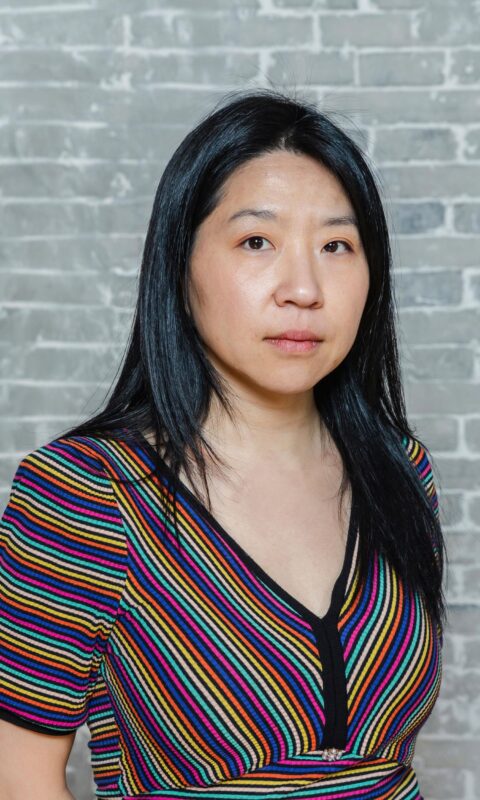
策展人,评论人,卡蒂斯特(Kadist)中国合作项目总监。对行为表演艺术及其扩展领域的研究兴趣是富源的策展实践和写作重点。她近期作为德英基金会支持的策展学者,研究和勾勒艺术家旅行的轮廓。2016 年至 2019 年,富源联合创建和管理 Salt Projects,一个位于北京的非营利艺术空间。2019 年至 2022 年,她作为创始艺术总监加入美凯龙艺术中心,并策划了开馆群展 “大象出走”,张怡、童文敏、邵纯的个展,数字委任项目 “赤屏” 以及相关公共项目。此前,她曾策划的群展和项目包括:“Come Together: Surviving Sandy”(Dedalus 基金会,2013);“抵抗的涌现”(泰康空间,北京,2016);“自我批评”(中间美术馆,北京,2017);“时间的狂喜”(何香凝美术馆,深圳,2017);“众神失语的日子”(都爹利会馆,香港,2018);“离岸” 驻留(哥打京那巴鲁,2019);以及邢丹文、铁木尔・斯琴、刘野夫、蒋志、常羽辰、彭可、王芮、李姝睿等艺术家的个展。 富源是双语数字出版平台《黑齿》杂志的创刊主编之一。她的文章曾多次发表在《Artforum》、《ARTnews》、《BOMB》、《Flash Art》、《Frieze》等艺术杂志上。
Yuan Fuca, curator, writer, and Kadist’s Associate Program Director for China. Her curatorial practice and writings focus on performance art and its associated fields. Recently she was a curatorial fellow supported by De Ying Foundation, studying artists at travel. From 2016 to 2019, she co-founded and managed Salt Projects, a non-profit art space in Beijing. From 2019 to 2022, she served as the founding artistic director at The Macalline Center of Art (MACA). During her tenure, she curated the Center’s opening exhibition “The Elephant Escaped”, solo exhibitions of Patty Chang, Tong Wenmin, and Shao Chun, and digital commission program “Bare Screen” and its public events. Previously, she curated a number of group exhibitions and projects, such as “Come Together: Surviving Sandy” (Dedalus Foundation, 2013), “Toward The Emergence of Resistance” (Taikang Space, Beijing, 2016), “Self-Criticism” (Inside-Out Art Museum, Beijing, 2017), “The Ecstasy of Time” (He Xiangning Art Museum, Shenzhen, 2017), “The Day the Gods Stop Laughing” (Duddell’s, Hong Kong, 2018), “Offshore” residency (Kota Kinabalu, 2019). She also curated solo exhibitions of Xing Danwen, Timur Si-Qin, Liu Yefu, Jiang Zhi, Chang Yuchen, Peng Ke, Wang Rui, Li Shurui, and others. She is a founding editor of Heichi Magazine, an online bilingual publishing platform. Her writing has been published in Artforum, Artnews, BOMB, Flash Art, and Frieze.